Went on a nice hike with an American friend today. We took a bus from the CBD up the first big hill to Brooklyn, where we started walking through residential and suburban neighborhoods until suddenly we were in the bush on a track that wound along steep ridges covered in scrubby bush, flowering gorse, pines and grass. The weather was gorgeous - still, clear and sunny. We climbed up to the turbine and I admired the view over Wellington harbor and neighborhoods. I turned to walk back to Z and realized that the white formation off in the distance was not a cloud: I was looking at an conical, snow-covered mountain on the South Island. Hiking with layers of misty blue and white mountains in the distance, I couldn't help but think of LOTR. Yes, I am a dork. After walking for three hours, we made it down to the coast along the Cook Strait. I dipped my hands in the water and discovered that's it's cold enough to make Monterey proud. There was nothing about it that said, Come on In!
Five hours later, I'm back home with achier legs and stickier shirt. I like how close we are to hiking here. No need to get in a car at all. I could use more walking in my life. And yet the jury is still out on eNZed.
What confuses the whole situation for me is how much I've changed over the past few years. There was a time not so long ago that I thought I wanted to live on a big chunk of land far away from other people. I don't think that's the case now at all. In fact, I'd rather live in a city where I can access just about everything I need by foot, bike or bus. I think it's a greener way to live.
That's the other thing I'm thinking a lot about: carbon dioxide. I'm reading a great book, The Weather Makers by Tim Flannery, that discusses global climate change. It's scary and fascinating and it certainly has me thinking about everything in a different way.
Including where I want to live. Perhaps I should look on this as growing pains. I'm trying to adjust to a new mentality, which is just as awkward as a toddler learning to walk. And much less amusing.
August 30, 2006


August 24, 2006
I Love This Place/I Hate This Place
Tuesday
We start a process of exploring Wellington's neighborhoods one by one to figure out where we would want to live should we decide to stay here.
Newtown: Thrift shops, dime stores, kebabs, chippers and good coffee. All in all we give it the big blah.
Over the hill to Kilbirnie: much bigger and bland as they come. We head into the organic food shop which is very small but stocked with brands I recognize, including corn chips that are not flavored with cheese product.
Melbourne seems better and better.
I write to Vic prof to express real concerns about my ability to engage in a project with a field component due both to conditions (gale force warnings one out of every three days in the Cook Strait) and a dive program experiencing growing pains. Would it be better at Melbourne Uni?
Tuesday night is cold - really cold.
Wednesday
First thought of the day: We should move to Melbourne. I write to two profs at Melbourne Uni.
Then I get a comprehensive response from Vic prof in which he more than adequately addresses all of my questions and then proceeds to introduce me to his other students. Wellington sounds great.
We walk over to Brooklyn, take a wrong turn and end up panting up a really steep hill where we are rewarded with views of the Cook Strait. Despite the fact that we're several miles from the coast and on top of a hill, I can see the white caps. We wind through residential streets to the "center" of Brooklyn which is fairly appealing and features a malay/chipper/thai/chinese/burger joint. More cute houses and lots of parks and I realize that I wouldn't mind living here as long as we were on the lower part of the downtown side. Living in Wellington for three years doesn't seem so bad.
We hit downtown at about 5:00 and it's full of people leaving work. I am wearing about four layers not including hat, scarf and coat. We pass women in skirts and light coats and feel like we're the coldest people in Wellington.
We realize that there is no hidden section to Wellington that we have not yet discovered. Nope, what we've seen is what we'll get, which is a polite way to say that it's small. Really small. We wander in search of somewhere to get good appetizers for a decent price. Nothing. More nothing. We eat in some cafe and realize that every one is much younger than us. Most people our age live in London or Sydney. Maybe we should follow their lead.
We end up back at the Dubliner which is quiet and comfortable. Z mis-orders, and we sip at a beer that tastes like it had an unfortunate run-in with a gewurztraminer and work our way through yet another crossword puzzle. We agree that Wellington may just be too small, though if we ended up here for a PhD program it wouldn't be bad. Melbourne would probably be better.
Back into the cold we go to meet Neener. We walk in circles until we realize that there are two burger kings and she meant the second one. She introduces us to more of her friends. They are outgoing, interesting, occasionally incomprehensible (hate sounds like "hit" and a "pin" is a pen) and two of them are hilariously drunk. We sip cocktails in a bar straight off the set of LA Confidential and talk. It's a fabulous night and we have a great time. And everyone agrees that it's really cold, which makes us feel much less wimpy.
Walking up the driveway we see scorpio twinkling overhead near a smudge of the milky way. Z and I agree that we will probably stay here.
Thursday
I get a response from a prof at Melbourne Uni who has a really interesting take on my research questions and is currently seeking funding for a similar study.
Melbourne?
We start a process of exploring Wellington's neighborhoods one by one to figure out where we would want to live should we decide to stay here.
Newtown: Thrift shops, dime stores, kebabs, chippers and good coffee. All in all we give it the big blah.
Over the hill to Kilbirnie: much bigger and bland as they come. We head into the organic food shop which is very small but stocked with brands I recognize, including corn chips that are not flavored with cheese product.
Melbourne seems better and better.
I write to Vic prof to express real concerns about my ability to engage in a project with a field component due both to conditions (gale force warnings one out of every three days in the Cook Strait) and a dive program experiencing growing pains. Would it be better at Melbourne Uni?
Tuesday night is cold - really cold.
Wednesday
First thought of the day: We should move to Melbourne. I write to two profs at Melbourne Uni.
Then I get a comprehensive response from Vic prof in which he more than adequately addresses all of my questions and then proceeds to introduce me to his other students. Wellington sounds great.
We walk over to Brooklyn, take a wrong turn and end up panting up a really steep hill where we are rewarded with views of the Cook Strait. Despite the fact that we're several miles from the coast and on top of a hill, I can see the white caps. We wind through residential streets to the "center" of Brooklyn which is fairly appealing and features a malay/chipper/thai/chinese/burger joint. More cute houses and lots of parks and I realize that I wouldn't mind living here as long as we were on the lower part of the downtown side. Living in Wellington for three years doesn't seem so bad.
We hit downtown at about 5:00 and it's full of people leaving work. I am wearing about four layers not including hat, scarf and coat. We pass women in skirts and light coats and feel like we're the coldest people in Wellington.
We realize that there is no hidden section to Wellington that we have not yet discovered. Nope, what we've seen is what we'll get, which is a polite way to say that it's small. Really small. We wander in search of somewhere to get good appetizers for a decent price. Nothing. More nothing. We eat in some cafe and realize that every one is much younger than us. Most people our age live in London or Sydney. Maybe we should follow their lead.
We end up back at the Dubliner which is quiet and comfortable. Z mis-orders, and we sip at a beer that tastes like it had an unfortunate run-in with a gewurztraminer and work our way through yet another crossword puzzle. We agree that Wellington may just be too small, though if we ended up here for a PhD program it wouldn't be bad. Melbourne would probably be better.
Back into the cold we go to meet Neener. We walk in circles until we realize that there are two burger kings and she meant the second one. She introduces us to more of her friends. They are outgoing, interesting, occasionally incomprehensible (hate sounds like "hit" and a "pin" is a pen) and two of them are hilariously drunk. We sip cocktails in a bar straight off the set of LA Confidential and talk. It's a fabulous night and we have a great time. And everyone agrees that it's really cold, which makes us feel much less wimpy.
Walking up the driveway we see scorpio twinkling overhead near a smudge of the milky way. Z and I agree that we will probably stay here.
Thursday
I get a response from a prof at Melbourne Uni who has a really interesting take on my research questions and is currently seeking funding for a similar study.
Melbourne?
August 22, 2006
Disproving a hypothesis
By my calculations, we have a little over two weeks in which to decide whether or not we are staying in Wellington. That will leave us with about a month to find our own place to live. Two weeks!?!? Eek!
How does one go about making decisions of this magnitude? What should one look for in a place to live? What's important to me? To Z? To us?
My best approach to answering these questions is to resort to the use of science. In science, you don't set out to prove anything but instead strive to disprove a hypothesis. Using this method, I assume that we are staying in Wellington and spend the next two weeks trying to find a reason to leave. A good reason to leave, because our back-up plan (Melbourne) may not be any better. If we go to Melbourne hoping it makes up for some of the things lacking in Wellington, we may be sorely disappointed. However, if we go to Melbourne because we've found something that really won't work for us in Wellington, we're more likely to not regret the decision to move on. (Those who know me well may recognize another situation in which this same approach was employed - I'll leave you guessing.)
We'll see how this fine principal works when put into practice - if I can put it into practice!
In other news, I have been conditionally accepted into a Ph.D. program at Victoria University in Wellington. The conditional part goes away when I secure funding in the form of a scholarship. I'll know about that by early December, though my potential advisor said I have a really good shot. Basically, it looks like I'll be starting a PhD program in January. Excuse me while I emit another EEEK!
This is good news - I think. It does make the committment to being away for three years feel more real. When I was in SF, the time and distance were more abstract. Now that I'm faced with the reality, I feel bewildered. In the end, I suppose all we can do is make a decision and live with it. After all, three years is only three years.
How does one go about making decisions of this magnitude? What should one look for in a place to live? What's important to me? To Z? To us?
My best approach to answering these questions is to resort to the use of science. In science, you don't set out to prove anything but instead strive to disprove a hypothesis. Using this method, I assume that we are staying in Wellington and spend the next two weeks trying to find a reason to leave. A good reason to leave, because our back-up plan (Melbourne) may not be any better. If we go to Melbourne hoping it makes up for some of the things lacking in Wellington, we may be sorely disappointed. However, if we go to Melbourne because we've found something that really won't work for us in Wellington, we're more likely to not regret the decision to move on. (Those who know me well may recognize another situation in which this same approach was employed - I'll leave you guessing.)
We'll see how this fine principal works when put into practice - if I can put it into practice!
In other news, I have been conditionally accepted into a Ph.D. program at Victoria University in Wellington. The conditional part goes away when I secure funding in the form of a scholarship. I'll know about that by early December, though my potential advisor said I have a really good shot. Basically, it looks like I'll be starting a PhD program in January. Excuse me while I emit another EEEK!
This is good news - I think. It does make the committment to being away for three years feel more real. When I was in SF, the time and distance were more abstract. Now that I'm faced with the reality, I feel bewildered. In the end, I suppose all we can do is make a decision and live with it. After all, three years is only three years.
August 17, 2006
Gumboots, "Mounts" and Brooklyn
We arrived in Auckland four days ago. Our friend Sean introduced us to NZ by taking us out to Karekare beach. It was a day where rain and brilliant sunshine fought for control of the skies. The ocean was wild and big; from the beach, we looked up at a mass of seething water. Mist and foam blew across the black sand and cliffs, and the tea trees were bent to a uniform height that made the hills look like they were covered by a manicured hedge. From the beach, we walked to a waterfall that spilled down a black, rocky cliff into a peaceful green pool. If Hawai'i and Scotland had a love-child, it would be NZ.
On our second day in Auckland, we took the ferry across the bay to Devenport where there was really nothing much to see or do. We did, however, climb "Mount" Victoria which is one of several very small volcanoes jutting up from Auckland's neighborhoods. Even Mainers would laugh at the designation of "Mount" for these bumps. I think they probably stand at an elevation of 120ft. On a good day.
On Wednesday, we caught the train down to Wellington. On the way, our naps were interupted by announcements made by a woman who sounded like a man and who therefore made me think of Eddie Izzard, and another couldn't pronounce her "r's" which left me wondering if towns like Wairaparara were actually Waiwapawawa. They told us about the sites as we passed them: the town in which the annual sheep shearing competition is held (note, to your left, the lovely and large statue of someone shearing a sheep); numerous tunnels and viaducts (length, date of construction, and height described free of charge); the carrot-growing region of NZ; a length of track that completed a spiral to get up a grade (oh the excitement!); and, my favorite, the site of the annual gumboot throwing competition. Indeed, an entry for the Guiness Book of World Records was made right there when someone tossed a size 8 gumboot 74 meters.
The train also passed by some truly impressive (and active) volcanoes covered in snow. Off in the distance, a perfectly conical peak poked its head through a ring of clouds, while next to us, a huge and scraggly mountain rose from the flat lands surrounding it. There were double rainbows and hours of rolling green farmland covered in sheep and the occasional wild peacock. It was a pretty ride.
And now we're in Wellington where it is neither windy nor particularly cold nor raining. Today, we hiked through one of the city's many green belts to another "Mount" Victoria and sat at the top in the sunshine looking at the city through the branches of a tree that someone had cleverly planted right in front of the view point's only bench. We sat and talked and tried to come to terms with the fact that we have just moved halfway around the world. Excitement, nervousness and overwhelm and vying for control of my mind at any given moment - that is except when sleep wins, as it does at around 8:00pm!
Wellington seems to have a lot of interesting people, at least to look at, though it is disappointing to discover that the 80's resurgence that has gripped the 20-somethings of America has also taken root here. Enough with the polka-dot bubble skirts and skinny jeans with heels! Enough stripey shirts with big belts!
There are also lots of cafes and restaurants and pubs. The aforementioned train operators told us that Wellington actually has more cafes and pubs than New York city -- per capita. Wellington also has Brooklyn, which, as it turns out, is right next to Central Park. And, Wellington contains perhaps the only immigration office in the world staffed by friendly, smiling people who really are there to help. So far, I'm liking what I see. Now I just need to find me a Ph.D. program.
You too can experience the wonders of our first four days in NZ by checking out some pictures here (listed under 2006 - the honeymoon is over, folks).
On our second day in Auckland, we took the ferry across the bay to Devenport where there was really nothing much to see or do. We did, however, climb "Mount" Victoria which is one of several very small volcanoes jutting up from Auckland's neighborhoods. Even Mainers would laugh at the designation of "Mount" for these bumps. I think they probably stand at an elevation of 120ft. On a good day.
On Wednesday, we caught the train down to Wellington. On the way, our naps were interupted by announcements made by a woman who sounded like a man and who therefore made me think of Eddie Izzard, and another couldn't pronounce her "r's" which left me wondering if towns like Wairaparara were actually Waiwapawawa. They told us about the sites as we passed them: the town in which the annual sheep shearing competition is held (note, to your left, the lovely and large statue of someone shearing a sheep); numerous tunnels and viaducts (length, date of construction, and height described free of charge); the carrot-growing region of NZ; a length of track that completed a spiral to get up a grade (oh the excitement!); and, my favorite, the site of the annual gumboot throwing competition. Indeed, an entry for the Guiness Book of World Records was made right there when someone tossed a size 8 gumboot 74 meters.
The train also passed by some truly impressive (and active) volcanoes covered in snow. Off in the distance, a perfectly conical peak poked its head through a ring of clouds, while next to us, a huge and scraggly mountain rose from the flat lands surrounding it. There were double rainbows and hours of rolling green farmland covered in sheep and the occasional wild peacock. It was a pretty ride.
And now we're in Wellington where it is neither windy nor particularly cold nor raining. Today, we hiked through one of the city's many green belts to another "Mount" Victoria and sat at the top in the sunshine looking at the city through the branches of a tree that someone had cleverly planted right in front of the view point's only bench. We sat and talked and tried to come to terms with the fact that we have just moved halfway around the world. Excitement, nervousness and overwhelm and vying for control of my mind at any given moment - that is except when sleep wins, as it does at around 8:00pm!
Wellington seems to have a lot of interesting people, at least to look at, though it is disappointing to discover that the 80's resurgence that has gripped the 20-somethings of America has also taken root here. Enough with the polka-dot bubble skirts and skinny jeans with heels! Enough stripey shirts with big belts!
There are also lots of cafes and restaurants and pubs. The aforementioned train operators told us that Wellington actually has more cafes and pubs than New York city -- per capita. Wellington also has Brooklyn, which, as it turns out, is right next to Central Park. And, Wellington contains perhaps the only immigration office in the world staffed by friendly, smiling people who really are there to help. So far, I'm liking what I see. Now I just need to find me a Ph.D. program.
You too can experience the wonders of our first four days in NZ by checking out some pictures here (listed under 2006 - the honeymoon is over, folks).
August 01, 2006
Just kidding - the light was a train
There I was thinking that everything was good. And then Z's computer woes got worse. And worse. And then hit total suck rock bottom bad. So instead of watching the sun sink into the Pacific Ocean from our camp site in Big Sur we spent the day in Circuit City transferring data from old hard drive to new laptop. But hey, it wasn't so bad. In the end, the new computer worked and the data was saved and we were treated to a fantastic meal and so everything was fine.
On Friday we drove to LA through the baking Central Valley. We were dreading the trip until Z realized how lucky we were to be in our own car (borrowed from Z's parents - far better than a rental) and not in some cockroach-infested dusty bus on a broken seat for 14 hours. Six hours later we arrive in LA in one piece despite the loveseat that someone dropped into the middle of our lane at the bottom of the grapevine, and me sandwiched between a truck and minivan. Hooray for good brakes!
And we see Aunt Sylvia (one of the kindest people I know) and enjoy her airconditioned house and eat some food before heading over to our storage unit to pick up a few things.
Or so we think. Turns out that the world had some more suck for us.
Back in Ethiopia, I remember Z telling me that there'd been a small flood in the storage room but that everything was OK. I didn't really give it too much thought. We were, after all, in Ethiopia and therefore unable to do a single thing. And hey! Everything was OK, right?
Well, it turns out that it isn't all OK. More than a few boxes were completely rotten, the cardboard disintegrating in our hands and cockroaches scuttling around inside. And the contents? Beyond rescue. Some of the stuff doesn't matter - it's just stuff, after all. But those four scrapbooks of mine? Gone. That great photo of Z with Steve Martin? Gone. My clothes? Gone. Z's shoes? Gone. We filled a dumpster with boxes and mould and scrapbooks and photos and clothes and broken plates and a rolling pin that looked like it belonged in a mycology lab. And it sucked.
Before we left on our honeymoon, we pared down our belongings to the essentials - the important stuff. We have now pared down some more. There's some lesson here about detachment but hell if I can stomach it right now.
After some discussion, we arrived at the conclusion that we needed to find another storage space. Which meant renting a van. Except no-one will rent a cargo van for a one-way trip (we find this out at Enterprise after speeding from Woodland Hills to Van Nuys to catch the store before it closes (at NOON on a Saturday) and to get the last cargo van available). And all the trucks have been rented because it's the last weekend of the month. So I call and call and call as Z washes out a box of kitchen stuff and repacks it. And I call. I find some woman with a heavy Russian accent who offers to help secure a U-Haul van. She says she'll try her best and call me back. Then I get through to Budget in Northridge and they have a truck - but we have to get it today. As in right now. So, back in the car to go speeding off to Northridge. And yay! We have a truck.
So we go and have a wonderful evening with Tano and Holly and Header. The latter is sweet enough to bring me a brand new dress that she bought to make up for the fact that I'd just lost all my clothes. Z approves of the plunging neckline.
Sunday morning rolls around. We are not driving via Santa Barbara where I was supposed to meet up with my advisor to go diving at Santa Cruz Island. No, I've had to cancel that, too. Instead, I'm in the shower when Z comes in to say there's some woman on the phone with a heavy Russian accent who's threatening to charge us for a U-Haul truck because we haven't come to pick it up. Oh, and good morning.
At this point, I want to give the world the finger. Instead, I call the woman back and she yells at me. I apologize for upsetting her and she yells and I apologize again and let her yell some more. She never says anything about charging us - I don't think she will. I think she just needed to get angry.
So, we load up the truck with mouldy stuff and head out of LA, stopping for a delicious breakfast at 1:00pm at Burger King (shudder) - but there's nothing else in the strip mall hell that is the valley. And we drive home past Cowshwitz up I-5, me bopping away to the iPod (not mouldy) and Z listening to my damp CD's. We unload into Z's folks' garage with their help and find parking for the truck on a Sunday evening in Russian Hill. We fall into bed at 9:00pm.
This morning, I returned the truck and had to fight the woman at Budget over "damage" to the truck that I did not do nor notice when I inspected the truck in LA. She points it out to me several times and I can barely see it. It's the kind of thing you would only notice if you were used to looking at trucks - compartively, I can see that the piece is bent. But just looking at one truck, I can't tell. Fortunately, her manager agrees with me and I leave with our full deposit.
And now I'm sorting through out stuff, removing the mould, doing loads and loads and loads of laundary, and carrying stuff to Henry the drycleaner and praying that he'll be able to salvage the good stuff. My moms-in-law has been a fabulous help, braving bags of mouldy, still-damp sheets and helping to sniff-test Z's clothes (that takes a brave nose).
As for me, I'm just trying to remember that this is a new week. And I'm trying to believe that it's all going to be OK. I mean, at some point, things have to get easier for us, right???
On Friday we drove to LA through the baking Central Valley. We were dreading the trip until Z realized how lucky we were to be in our own car (borrowed from Z's parents - far better than a rental) and not in some cockroach-infested dusty bus on a broken seat for 14 hours. Six hours later we arrive in LA in one piece despite the loveseat that someone dropped into the middle of our lane at the bottom of the grapevine, and me sandwiched between a truck and minivan. Hooray for good brakes!
And we see Aunt Sylvia (one of the kindest people I know) and enjoy her airconditioned house and eat some food before heading over to our storage unit to pick up a few things.
Or so we think. Turns out that the world had some more suck for us.
Back in Ethiopia, I remember Z telling me that there'd been a small flood in the storage room but that everything was OK. I didn't really give it too much thought. We were, after all, in Ethiopia and therefore unable to do a single thing. And hey! Everything was OK, right?
Well, it turns out that it isn't all OK. More than a few boxes were completely rotten, the cardboard disintegrating in our hands and cockroaches scuttling around inside. And the contents? Beyond rescue. Some of the stuff doesn't matter - it's just stuff, after all. But those four scrapbooks of mine? Gone. That great photo of Z with Steve Martin? Gone. My clothes? Gone. Z's shoes? Gone. We filled a dumpster with boxes and mould and scrapbooks and photos and clothes and broken plates and a rolling pin that looked like it belonged in a mycology lab. And it sucked.
Before we left on our honeymoon, we pared down our belongings to the essentials - the important stuff. We have now pared down some more. There's some lesson here about detachment but hell if I can stomach it right now.
After some discussion, we arrived at the conclusion that we needed to find another storage space. Which meant renting a van. Except no-one will rent a cargo van for a one-way trip (we find this out at Enterprise after speeding from Woodland Hills to Van Nuys to catch the store before it closes (at NOON on a Saturday) and to get the last cargo van available). And all the trucks have been rented because it's the last weekend of the month. So I call and call and call as Z washes out a box of kitchen stuff and repacks it. And I call. I find some woman with a heavy Russian accent who offers to help secure a U-Haul van. She says she'll try her best and call me back. Then I get through to Budget in Northridge and they have a truck - but we have to get it today. As in right now. So, back in the car to go speeding off to Northridge. And yay! We have a truck.
So we go and have a wonderful evening with Tano and Holly and Header. The latter is sweet enough to bring me a brand new dress that she bought to make up for the fact that I'd just lost all my clothes. Z approves of the plunging neckline.
Sunday morning rolls around. We are not driving via Santa Barbara where I was supposed to meet up with my advisor to go diving at Santa Cruz Island. No, I've had to cancel that, too. Instead, I'm in the shower when Z comes in to say there's some woman on the phone with a heavy Russian accent who's threatening to charge us for a U-Haul truck because we haven't come to pick it up. Oh, and good morning.
At this point, I want to give the world the finger. Instead, I call the woman back and she yells at me. I apologize for upsetting her and she yells and I apologize again and let her yell some more. She never says anything about charging us - I don't think she will. I think she just needed to get angry.
So, we load up the truck with mouldy stuff and head out of LA, stopping for a delicious breakfast at 1:00pm at Burger King (shudder) - but there's nothing else in the strip mall hell that is the valley. And we drive home past Cowshwitz up I-5, me bopping away to the iPod (not mouldy) and Z listening to my damp CD's. We unload into Z's folks' garage with their help and find parking for the truck on a Sunday evening in Russian Hill. We fall into bed at 9:00pm.
This morning, I returned the truck and had to fight the woman at Budget over "damage" to the truck that I did not do nor notice when I inspected the truck in LA. She points it out to me several times and I can barely see it. It's the kind of thing you would only notice if you were used to looking at trucks - compartively, I can see that the piece is bent. But just looking at one truck, I can't tell. Fortunately, her manager agrees with me and I leave with our full deposit.
And now I'm sorting through out stuff, removing the mould, doing loads and loads and loads of laundary, and carrying stuff to Henry the drycleaner and praying that he'll be able to salvage the good stuff. My moms-in-law has been a fabulous help, braving bags of mouldy, still-damp sheets and helping to sniff-test Z's clothes (that takes a brave nose).
As for me, I'm just trying to remember that this is a new week. And I'm trying to believe that it's all going to be OK. I mean, at some point, things have to get easier for us, right???
July 26, 2006
That light is not a train
On Friday, I sat in the central quad at San Francisco State University reading scientific papers and wondering if I had really graduated. After getting most of the way through a paper authored by a Kiwi professor with whom I'd like to work, I went and talked to my old advisor. The excuse for the meeting was to discuss the manuscripts that I'm preparing from my theis, though we quickly got off-topic to discuss things like my wedding, travel, and how diving in CA compares to diving in the tropics (CA wins, btw). Our on-topic discussions were interesting, too. We chatted, of course, about my friend the treefish and all the questions that are left unanswered by my thesis. If it's true that good research leads to more questions, my thesis must be downright brilliant!
It was a fantastic day. I realized - remembered - that I love doing science. I love discussing experimental designs; I love learning about the latest research; I even love manipulating and analyzing data. I really enjoy engaging in the particular kind of thinking that doing science requires. (Someone's going to make a nerd joke here and to you I say, Bringit!)
Before Friday, I had decided to get a PhD because I couldn't figure out what else I would do. All the jobs that looked interesting required a PhD, and the jobs I could get with a MSc would be primarily administrative. So the PhD seemed like a no-brainer. But it didn't seem like fun.
Since Friday, I have been excited about the PhD not only because of where it will get me, but also because it will be fascinating in its own right. And let me tell you what a huge relief it is to be excited about the future rather than feeling lost and full of dread.
While Z extracted data from the dead hard drive of his brand new laptop (long and very sucky story with what looks to be a happy ending - fingers crossed), I sat in the sun and read E's New Zealand Lonely Bollocks guidebook. Wellington sounds beautifully arranged on steep hills overlooking a harbor (sound familiar?). There seems to be all sorts of things to do, from music and pubs to art galleries and theatre. I'm really looking forward to it, despite having a dream about a dead body in the bathtub of my rickety NZ house. Who know what that was about!
All in all, it feels like the blinding light that has been shining directly into my face for the last year might not be a train. I can't help but feel like this is a positive development.
It was a fantastic day. I realized - remembered - that I love doing science. I love discussing experimental designs; I love learning about the latest research; I even love manipulating and analyzing data. I really enjoy engaging in the particular kind of thinking that doing science requires. (Someone's going to make a nerd joke here and to you I say, Bringit!)
Before Friday, I had decided to get a PhD because I couldn't figure out what else I would do. All the jobs that looked interesting required a PhD, and the jobs I could get with a MSc would be primarily administrative. So the PhD seemed like a no-brainer. But it didn't seem like fun.
Since Friday, I have been excited about the PhD not only because of where it will get me, but also because it will be fascinating in its own right. And let me tell you what a huge relief it is to be excited about the future rather than feeling lost and full of dread.
While Z extracted data from the dead hard drive of his brand new laptop (long and very sucky story with what looks to be a happy ending - fingers crossed), I sat in the sun and read E's New Zealand Lonely Bollocks guidebook. Wellington sounds beautifully arranged on steep hills overlooking a harbor (sound familiar?). There seems to be all sorts of things to do, from music and pubs to art galleries and theatre. I'm really looking forward to it, despite having a dream about a dead body in the bathtub of my rickety NZ house. Who know what that was about!
All in all, it feels like the blinding light that has been shining directly into my face for the last year might not be a train. I can't help but feel like this is a positive development.
June 29, 2006
Rolling in Sheep
Back in October, I thought I was being so clever to avoid all the "What's next?" questions that accompany any major life change - like marriage or graduation or moving house/country. I laughed me all the way to Africa in my cleverness. I laughed from Africa to the Middle East, and from there to Asia and even laughed in Australia. Well, the laughing stopped about three days after we landed at SFO. All those questions weren't avoided so much as they were postponed. We have since had a head-on collision, them in their Hummer and me in my Geo Metro. (They won.) I am now mired in a morass of WHAT THE HELL AM I DOING WITH MY LIFE?
While it may not sound like returning to SF for the summer was a brilliant plan, it has managed to answer one question about where I want to live: Not here, at least not right now. It seems that almost everywhere we've been has been a whole lot of "Not here". Which begs the question, "Then Where?" The answer is contained within a multidimensional scatterplot with axes like (but not limited to) job availability, job likability, friendliness quotient, distance from family, minimum temperature, proximity to water, language barriosity, and cost of living. It's a complicated business trying to make decisions for two people.
On Monday night, waiting for the 49 bus (our new Muni friend which I already hate), Zack pointed out that I have street humor. This is not to imply that I have a potty mouth (which I do, but that's not the point), but rather that my humour is spur-of-the-moment, spy-a-shiny-thing-on-the-ground-and-pick-it-up in character. At least I usually laugh.
And on Saturday, Bill taught us a new game the name of which I've already forgotten but which was great fun. It involved Zack rolling in sheep. And we haven't even got to New Zealand yet.
While it may not sound like returning to SF for the summer was a brilliant plan, it has managed to answer one question about where I want to live: Not here, at least not right now. It seems that almost everywhere we've been has been a whole lot of "Not here". Which begs the question, "Then Where?" The answer is contained within a multidimensional scatterplot with axes like (but not limited to) job availability, job likability, friendliness quotient, distance from family, minimum temperature, proximity to water, language barriosity, and cost of living. It's a complicated business trying to make decisions for two people.
On Monday night, waiting for the 49 bus (our new Muni friend which I already hate), Zack pointed out that I have street humor. This is not to imply that I have a potty mouth (which I do, but that's not the point), but rather that my humour is spur-of-the-moment, spy-a-shiny-thing-on-the-ground-and-pick-it-up in character. At least I usually laugh.
And on Saturday, Bill taught us a new game the name of which I've already forgotten but which was great fun. It involved Zack rolling in sheep. And we haven't even got to New Zealand yet.
June 21, 2006
To Excess
Our first day in Melbourne, we head to the supermarket with mum. I'm excited about cooking dinner and we need supplies. I forget that this simple errand can induce culture shock. And it does. There are aisles and aisles and aisles and they're all full of food. At least, I think it's food. Everything is wrapped or canned or otherwise packaged and there's no smell. I compare this experience to that of most Africans and get a taste of the shock of immigration. Not only must it be a hard adjustment to make personally, but also there are friends and family still at home who do not have access to such excess.
On Saturday night in San Francisco, we head over to our old 'hood to play ring toss. On our way back to Muni we pass Marcelo's and find we can't pass up on a slice of pizza. We sit at the window seats watching the Castro scene as a mopey song plays in the background. Again with the excess. There are shops like Marcelo's all over the city, full of food for the purchasing. I remember the pizza Z ordered in Lallibela: a piece of bread with a mainly ketchup sauce and about three small slivers of grated cheese. Not really comparable to Marcelo's at all.
And then yesterday, we walk over to Union Square in search of a watchmaker and I realize just how much capitalism sickens me. There are all these people who have too much money and then these other people who are busy finding ways for the people with too much money to part with their money, all in order to make more money that they can then spend on things and stuff that they don't actually need - but there are people whose job it is to convince them that they do actually desperately need sunscreen for their dog. It's all disgusting. And the worst part is when I realize that somehow they've sunk their barbs into me, too.
Ah, the joys of reentry. I think I'll have some lunch.
On Saturday night in San Francisco, we head over to our old 'hood to play ring toss. On our way back to Muni we pass Marcelo's and find we can't pass up on a slice of pizza. We sit at the window seats watching the Castro scene as a mopey song plays in the background. Again with the excess. There are shops like Marcelo's all over the city, full of food for the purchasing. I remember the pizza Z ordered in Lallibela: a piece of bread with a mainly ketchup sauce and about three small slivers of grated cheese. Not really comparable to Marcelo's at all.
And then yesterday, we walk over to Union Square in search of a watchmaker and I realize just how much capitalism sickens me. There are all these people who have too much money and then these other people who are busy finding ways for the people with too much money to part with their money, all in order to make more money that they can then spend on things and stuff that they don't actually need - but there are people whose job it is to convince them that they do actually desperately need sunscreen for their dog. It's all disgusting. And the worst part is when I realize that somehow they've sunk their barbs into me, too.
Ah, the joys of reentry. I think I'll have some lunch.
June 13, 2006
Camera Shutter?
David Attenborough rocks for many reasons (I'm dead serious). This clip of a lyre bird is one of them.
June 12, 2006
The Other Side
In the early 1940's, my paternal grandfather was given a 48-hour leave from the base where he was a mechanic for the RAF. He and another serviceman walked past a theatre and decided to go in. They dug into their pockets for change but were quickly told that they didn't need to pay. They were given front and centre seats ... at the theatre recently featured in the movie Mrs Henderson Presents. He said his eyeballs still haven't popped back into his head.
He and my grandmother have been married for 63 years. They met in Blythe when she was 14 and he was 17 and moved to Australia with three children in the mid-1950's. In Adelaide, they got off the boat with a single trunk and $50.
We spent two days with them in Adelaide, which, along with Melbourne, is having the coldest June since the 1800's. Some places are recording the coldest temperatures ever. I'm so glad we're here to feel such important history being made. My toes are not so glad. Despite socks and nearby heating, they remain frozen. But I digress.
My grandfather had lots of stories to tell. He told us about their friends dog who only eats chicken breast (cooked and diced) and who needs to be walked every night at midnight. He told us about where he was on D-day: his squadron moved from Iceland to a loch in Scotland in terrible weather. He said that when someone in the squadron was killed, you would say that he had gone to have a Burton - a type of beer. This allowed all the men to keep a stiff upper lip, which is a vital part of being British.
It took me a while to realise why seeing Nana was strange. In the past, she's been so motherly - going out of her way to take care of me. This time, it was she who needed to be taken care of. She's much more frail and her memory is not what it used to be. She asked us at least three times per day when we were moving to Tasmania. While her memory may be declining, her cooking has certainly improved, most likely attributable to my grandfather's heart attack. She can no longer use as primary ingredients bacon, cheese, butter, cream, bacon and cheese. All of our arteries are glad.
There are magpies a-plenty around their house and they have trained my grandparents quite well. In the morning, they warble just outside the back door and are rewarded with bread for breakfast. Then they warble for morning tea. And for lunch. And afternoon tea. They have quite a racket going. In the mornings, Z and I would wake up to their songs and extricate ourselves from the guest bed, which is older than me. It was impossible to avoid rolling downhill into the centre of the mattress, though sleeping close together (with pyjamas, socks and sweaters on) helped keep us warm. There were still windows in the house open despite the bitter cold.
The first morning I opted for a shower to warm up. The trickle of water dribbling out of the tap was barely hot without any cold water on at all. But I guess it's all a part of sucking it up and not complaining. As my grandfather likes to say, Keep a stiff upper lip.
He and my grandmother have been married for 63 years. They met in Blythe when she was 14 and he was 17 and moved to Australia with three children in the mid-1950's. In Adelaide, they got off the boat with a single trunk and $50.
We spent two days with them in Adelaide, which, along with Melbourne, is having the coldest June since the 1800's. Some places are recording the coldest temperatures ever. I'm so glad we're here to feel such important history being made. My toes are not so glad. Despite socks and nearby heating, they remain frozen. But I digress.
My grandfather had lots of stories to tell. He told us about their friends dog who only eats chicken breast (cooked and diced) and who needs to be walked every night at midnight. He told us about where he was on D-day: his squadron moved from Iceland to a loch in Scotland in terrible weather. He said that when someone in the squadron was killed, you would say that he had gone to have a Burton - a type of beer. This allowed all the men to keep a stiff upper lip, which is a vital part of being British.
It took me a while to realise why seeing Nana was strange. In the past, she's been so motherly - going out of her way to take care of me. This time, it was she who needed to be taken care of. She's much more frail and her memory is not what it used to be. She asked us at least three times per day when we were moving to Tasmania. While her memory may be declining, her cooking has certainly improved, most likely attributable to my grandfather's heart attack. She can no longer use as primary ingredients bacon, cheese, butter, cream, bacon and cheese. All of our arteries are glad.
There are magpies a-plenty around their house and they have trained my grandparents quite well. In the morning, they warble just outside the back door and are rewarded with bread for breakfast. Then they warble for morning tea. And for lunch. And afternoon tea. They have quite a racket going. In the mornings, Z and I would wake up to their songs and extricate ourselves from the guest bed, which is older than me. It was impossible to avoid rolling downhill into the centre of the mattress, though sleeping close together (with pyjamas, socks and sweaters on) helped keep us warm. There were still windows in the house open despite the bitter cold.
The first morning I opted for a shower to warm up. The trickle of water dribbling out of the tap was barely hot without any cold water on at all. But I guess it's all a part of sucking it up and not complaining. As my grandfather likes to say, Keep a stiff upper lip.
June 07, 2006
Standards
We just returned from a visit to my maternal grandmother's house in Kyneton, about an hour NW of Melbourne. I have always been nervous about introducing people (read: males) to my grandmother as she used to adhere to a standard of etiquette that would make Miss Manners swoon. When I was little, the most commonly heard phrase at the dinner table (which was set formally every night) was, "How would you behave if the Queen was here?" I had noticed, while in Malaysia, that Z manipulated his cutlery with his elbows somewhere up around his ears, a move that would have guaranteed a, "Where are you flying to, dear?" said pointedly, with snide haughtiness. This from the same grandmother who begged me not to marry an American as that would give me more reason to not return to Australia.
Needless to say, I was nervous to introduce the two of them. I had nothing to worry about. Last night, my grandmother said that she would like to keep Z. No, she had no need for mum and I to stay; just Z, thank you very much. I think what really enamored her was his ability to dry dishes. She just wouldn't stop going on about how her husband would never - Never! - have done anything in the kitchen; that was women's work. How things have changed! I would never - Never! - have considered marrying anyone who wouldn't help out in the kitchen. And I don't know a woman who would.
She's softened up a lot, my grandmother has. She's a bit wobbly on her feet and a looks a lot more frail. She has trouble thinking of the word she wants to say. Yesterday she was telling us a story about entertaining important guests when she lived in Malaysia. The food was taking a long time to appear so she went into the kitchen to see what the problem was. She found the cook on his hands and knees picking up (and here she fumbled) white stuff from the floor. What is that stuff called, she asked us? Rice? we guessed. Pasta? Spaghetti? Noodles? Rice? Finally, I said potatoes - and she was off to finish the story. She had the cook hurriedly wash the potatoes and serve them because the guests had already waited too long for the food. There was so much emphasis on looking right in that social circle and at that time. This also explains why she once served tea after seeing a cockroach floating in the tea pot: she couldn't admit that there were vermin in the kitchen! But don't worry - mum cooked the food on this most recent visit. Nothing fell on the floor or came into intimate contact with any kind of insect. I think.
It was great to see my grandmother again. I came to Australia in 2001 and saw her for what I thought would be the last time. I've seen her twice more since. To say that I'm glad she and Z had a chance to meet would be an understatement.
She's intent on being remembered - she wants to give her things away to people who will treasure them and use them. She gave us a beautiful silver pitcher that, she explained, allows one to have the wine decanted and ready to serve as soon as the guests arrive. Like I need things to remember my grandmother by. She will always be with me through her stories, her love of animals, her table manners and that stubborn streak that runs thick through the blood of this family's women. While looking through some old photographs, Z pointed out that she and I looked alike as young girls. I think it was the set of our jaws. I've never seen that resemblance before; it's one more way to remember her.
Needless to say, I was nervous to introduce the two of them. I had nothing to worry about. Last night, my grandmother said that she would like to keep Z. No, she had no need for mum and I to stay; just Z, thank you very much. I think what really enamored her was his ability to dry dishes. She just wouldn't stop going on about how her husband would never - Never! - have done anything in the kitchen; that was women's work. How things have changed! I would never - Never! - have considered marrying anyone who wouldn't help out in the kitchen. And I don't know a woman who would.
She's softened up a lot, my grandmother has. She's a bit wobbly on her feet and a looks a lot more frail. She has trouble thinking of the word she wants to say. Yesterday she was telling us a story about entertaining important guests when she lived in Malaysia. The food was taking a long time to appear so she went into the kitchen to see what the problem was. She found the cook on his hands and knees picking up (and here she fumbled) white stuff from the floor. What is that stuff called, she asked us? Rice? we guessed. Pasta? Spaghetti? Noodles? Rice? Finally, I said potatoes - and she was off to finish the story. She had the cook hurriedly wash the potatoes and serve them because the guests had already waited too long for the food. There was so much emphasis on looking right in that social circle and at that time. This also explains why she once served tea after seeing a cockroach floating in the tea pot: she couldn't admit that there were vermin in the kitchen! But don't worry - mum cooked the food on this most recent visit. Nothing fell on the floor or came into intimate contact with any kind of insect. I think.
It was great to see my grandmother again. I came to Australia in 2001 and saw her for what I thought would be the last time. I've seen her twice more since. To say that I'm glad she and Z had a chance to meet would be an understatement.
She's intent on being remembered - she wants to give her things away to people who will treasure them and use them. She gave us a beautiful silver pitcher that, she explained, allows one to have the wine decanted and ready to serve as soon as the guests arrive. Like I need things to remember my grandmother by. She will always be with me through her stories, her love of animals, her table manners and that stubborn streak that runs thick through the blood of this family's women. While looking through some old photographs, Z pointed out that she and I looked alike as young girls. I think it was the set of our jaws. I've never seen that resemblance before; it's one more way to remember her.
June 03, 2006
End of Travellator
We are in Australia, Melbourne to be precise. It is winter down here. Yesterday must have been a mild day because other people were walking around in t-shirts and light jackets. Emphasis on Other People. I sported four layers including woolen jumper (sweater to you yanks), long coat and scarf. In Malaysia, our a/c was set to 20C; here the heater is set to 20C. And everyone talks funny. I am doing my best to resist reverting to full-on Aussiedom knowing that communication between me and my husband would quickly devolve to grunted Huh's? and pantomime. So far, so good: we are still talking.
I have received many curious e-mails about my sister who moved to Melbourne with her husband in January. Despite the fact that we are all in the same house, I have seen her for all of 15 minutes (she was exhausted) in the three days we've been here. Hiding out? Who? Where??? Z has been great at reminding me exactly how much things have improved: she is talking to two members of the family (mum and her partner); she is working; she is not lying in a ditch somewhere. And yet, of course it is hard for me. I did not see her at her worst which means that now she appears as a shadow of the young woman I used to admire so much. I know that there was a huge dip between 2002 and 2006, a dip which I thankfully did not have to witness first-hand. Compared to that dip, she's doing brilliantly. But for me, it seems like a down from her former glory. It's sad; it's hard. And I'm trying not to let it completely rule my time here nor my emotional well-being. So, tonight we are going to stay with Alicia and Mick for a few days. It will be great to see them both; they are wonderfully fun people.
In other news, there are hilarious photos now up from the time we spent with Lev. They're on Z's site and we will hopefully be moving the rest of our photos to the same spot in the next month or so. Emphasis on the Or So.
It's interesting to be entering this new phase of our travels. In this part of the world, the moving walkways found at airports are called Travellators. En route to the car park in Melbourne aiport, a recording of a woman's voice sternly warned of the End of the Travellator. In Singapore, they had bright red signs. I took them as signs - as in Signs, of the end of our Travellator. I just need to remember to release the brake on my luggage-laden hand cart.
I have received many curious e-mails about my sister who moved to Melbourne with her husband in January. Despite the fact that we are all in the same house, I have seen her for all of 15 minutes (she was exhausted) in the three days we've been here. Hiding out? Who? Where??? Z has been great at reminding me exactly how much things have improved: she is talking to two members of the family (mum and her partner); she is working; she is not lying in a ditch somewhere. And yet, of course it is hard for me. I did not see her at her worst which means that now she appears as a shadow of the young woman I used to admire so much. I know that there was a huge dip between 2002 and 2006, a dip which I thankfully did not have to witness first-hand. Compared to that dip, she's doing brilliantly. But for me, it seems like a down from her former glory. It's sad; it's hard. And I'm trying not to let it completely rule my time here nor my emotional well-being. So, tonight we are going to stay with Alicia and Mick for a few days. It will be great to see them both; they are wonderfully fun people.
In other news, there are hilarious photos now up from the time we spent with Lev. They're on Z's site and we will hopefully be moving the rest of our photos to the same spot in the next month or so. Emphasis on the Or So.
It's interesting to be entering this new phase of our travels. In this part of the world, the moving walkways found at airports are called Travellators. En route to the car park in Melbourne aiport, a recording of a woman's voice sternly warned of the End of the Travellator. In Singapore, they had bright red signs. I took them as signs - as in Signs, of the end of our Travellator. I just need to remember to release the brake on my luggage-laden hand cart.
May 28, 2006
A Day in the Life
It's midnight. The light's been out for over an hour when we realize that none of us are able to sleep in the steaminess of our room in Bako National Park. Lev resurrects the ghost of Aruba (oooooooo!) and thwacks me in the face with a pillow. Z mumbles something and pretends that he's actually been able to sleep. I give up and take a sleeping pill. They lie awake until the storm breaks with (purportedly) torrential rain; I hear nothing.
I wake up a little before 8:00 feeling refreshed. Z and Lev are not so thrilled to greet the new day. I help Lev out of bed by putting a large, black, leggy insect on his pillow right next to his face. It does wonders.
We pack up and head to breakfast as the sky above us rumbles and drips. As we eat, a bearded pig does laps around the cafeteria. They are large beasts resembling dwarf bison that have somehow managed to get the contents of a can of salmon catfood stuck to their faces - their noses are pink, drastically bare compared to the hairiness of their faces, and tubular. And almost prehensile. In a word: strange.
It's low tide, so we walk a long way out to our boat, across mudflats crawling with a variety of crabs and some kind of worm in a round shell that flops around looking exactly like a caricature of large sperm. The sky is immense and grey over water that is flat and grey-green. It's hard to tell where sky and water meet. Thunder rolls from the green cloaked mountains across the sea. It begins to rain, big juicy drops that quickly soak us as we motor back to the bus stop.
The bus stop stinks. I can't see what it is that we're sitting next to, but I'm pretty sure it's been there a long time. Back in Kuching we check into the hotel with the fantastic showers and go out to eat. I get "fast food", otherwise known as buffet: a combination of coconut chicken with Indian spices and crisply cooked Chinese-style vegetables. I love Malaysia's international approach to cuisine.
After lunch, we set off in search of souvenirs and a taxi. The clouds have cleared and the temperature has soared. We find the latter, piloted by a man named Chin Chin Min, who has a triangular face and crinkled eyes. He takes us to Semonggok wildlife refuge. As we pass through the gates it begins to pour. And I mean POUR. We sit under an awning and wait for 3:00pm to arrive: Orang Utan feeding time. The world's most boring public speaker gives us a pianissimo introduction to the Park and its inhabitants. He says things like, "It's very dangerous to have [mumble mumble mumble] so be careful of the [mumble mumble mumble] and whatever you do, don't [mumble mumble mumble]." It's a very instructive speech.
After a short walk through dripping jungle, we see an Orang Utan. He is big and, we later learn, named Josh. After gorging on papaya, oranges and bananas, he lazily leaves the platform by deftly climbing a rope and swinging from vine to vine. He seems too big to achieve such quietly graceful movements.
Back at the hotel, we all fall asleep, naps punctuated by three really loud explosions. Perhaps someone is holding a microphone to a backfiring tailpipe? Or are they mining right outside our window? When I get up I check: No, Kuching is not on fire.
We splurge on a great meal and a bottle of wine that is not made from banana or papaya. Lev orders the organic chicken and is served an entire chicken in a delicious tandoori-like sauce. My lemongrass chicken comes with a mound of vegetables including broccoli. How I have missed broccoli! We finish with mud cake the ingredients of which are chocolate, chocolate, chocolate and chocolate. In chocolate sauce.
Suitably junked up on sugar, we head to a bar. It's ladies night: yay, free drinks! But, boo, apparently only if you're Asian. They try to charge me about $4 for half a glass of tonic that was held next to a bottle of gin. I try to send it back; they relent and give it to me for free.
We sit and try to figure out the social dynamics of the bar. We fail. No matter what we do, we are apparently doing it wrong. I dance anyway, and slowly as everyone in the bar gets more drunk, they loosen up. Soon I have not one, not two, but three stumblingly drunk women grinding themselves against me. I extricate myself and we move to another section of the bar where the women are able to stay on their feet without grabbing on to me. The music is a mix of Chinese pop, Bollywood, and 80's & 90's hits. I figure out the dancing rules: Grab and grind. There are no introductions; all those people I thought were couples have probably only just met. It's like 10th grade all over again.
And that is how the day ends: me and Lev sweatily dancing in a packed nightclub on Borneo. I just have to laugh at the absurdity of it all. This is my life.
I wake up a little before 8:00 feeling refreshed. Z and Lev are not so thrilled to greet the new day. I help Lev out of bed by putting a large, black, leggy insect on his pillow right next to his face. It does wonders.
We pack up and head to breakfast as the sky above us rumbles and drips. As we eat, a bearded pig does laps around the cafeteria. They are large beasts resembling dwarf bison that have somehow managed to get the contents of a can of salmon catfood stuck to their faces - their noses are pink, drastically bare compared to the hairiness of their faces, and tubular. And almost prehensile. In a word: strange.
It's low tide, so we walk a long way out to our boat, across mudflats crawling with a variety of crabs and some kind of worm in a round shell that flops around looking exactly like a caricature of large sperm. The sky is immense and grey over water that is flat and grey-green. It's hard to tell where sky and water meet. Thunder rolls from the green cloaked mountains across the sea. It begins to rain, big juicy drops that quickly soak us as we motor back to the bus stop.
The bus stop stinks. I can't see what it is that we're sitting next to, but I'm pretty sure it's been there a long time. Back in Kuching we check into the hotel with the fantastic showers and go out to eat. I get "fast food", otherwise known as buffet: a combination of coconut chicken with Indian spices and crisply cooked Chinese-style vegetables. I love Malaysia's international approach to cuisine.
After lunch, we set off in search of souvenirs and a taxi. The clouds have cleared and the temperature has soared. We find the latter, piloted by a man named Chin Chin Min, who has a triangular face and crinkled eyes. He takes us to Semonggok wildlife refuge. As we pass through the gates it begins to pour. And I mean POUR. We sit under an awning and wait for 3:00pm to arrive: Orang Utan feeding time. The world's most boring public speaker gives us a pianissimo introduction to the Park and its inhabitants. He says things like, "It's very dangerous to have [mumble mumble mumble] so be careful of the [mumble mumble mumble] and whatever you do, don't [mumble mumble mumble]." It's a very instructive speech.
After a short walk through dripping jungle, we see an Orang Utan. He is big and, we later learn, named Josh. After gorging on papaya, oranges and bananas, he lazily leaves the platform by deftly climbing a rope and swinging from vine to vine. He seems too big to achieve such quietly graceful movements.
Back at the hotel, we all fall asleep, naps punctuated by three really loud explosions. Perhaps someone is holding a microphone to a backfiring tailpipe? Or are they mining right outside our window? When I get up I check: No, Kuching is not on fire.
We splurge on a great meal and a bottle of wine that is not made from banana or papaya. Lev orders the organic chicken and is served an entire chicken in a delicious tandoori-like sauce. My lemongrass chicken comes with a mound of vegetables including broccoli. How I have missed broccoli! We finish with mud cake the ingredients of which are chocolate, chocolate, chocolate and chocolate. In chocolate sauce.
Suitably junked up on sugar, we head to a bar. It's ladies night: yay, free drinks! But, boo, apparently only if you're Asian. They try to charge me about $4 for half a glass of tonic that was held next to a bottle of gin. I try to send it back; they relent and give it to me for free.
We sit and try to figure out the social dynamics of the bar. We fail. No matter what we do, we are apparently doing it wrong. I dance anyway, and slowly as everyone in the bar gets more drunk, they loosen up. Soon I have not one, not two, but three stumblingly drunk women grinding themselves against me. I extricate myself and we move to another section of the bar where the women are able to stay on their feet without grabbing on to me. The music is a mix of Chinese pop, Bollywood, and 80's & 90's hits. I figure out the dancing rules: Grab and grind. There are no introductions; all those people I thought were couples have probably only just met. It's like 10th grade all over again.
And that is how the day ends: me and Lev sweatily dancing in a packed nightclub on Borneo. I just have to laugh at the absurdity of it all. This is my life.
May 12, 2006
May 04, 2006
A Slice of Pai
I'm sitting in an internet cafe under a fan, sweating like a pig. That's because it's 39C - inside, under the fan! It's gotta be well over 40C on the street.
It cooled down here for a while when Cyclone Mala stirred up weather in the Bay of Bengal causing a grey and intermittently raining sky to settle over the Pai valley. On the evening of the second full day of rain, a globular insect with flapping lacy wings hatched. Swarms of them filled our room, appearing from nowhere. They flew down my shirt and got tangled in my hair as we hurridly hung our mosquito net. A big, spotted gecko set up shop outside our bathroom window, grabbing excitedly at insects on both sides of the screen. At dinner, the chair by the light remained unoccupied - the air around it frothed with life. Nearby, frogs, toads and geckos chirrupped drunkenly. And then, as suddenly as they appeared, the insects were gone, though their brown winged carcasses littered our bathroom for days afterwards until the ants carried away those I hadn't managed to wash down the drain.
The rain cooled everything down and made the earth smell like it was growing. The river rose, the sandbanks disappeared, and we sat inside playing cards, reading, eating pad thai and discussing whether the clouds on the horizon were dark enough to signal rain or light enough to signal a break in the weather. Break it eventually did, with a spectacular day of brilliant blue sky and skudding puffy white clouds. The blue was so blue it hurt the eyes, and yet the clouds kept the sun from heating everything up excessively. That was a few days ago. Now we have flown rapidly past excessive heat and are into a whole other category of hot. Hot wind. Hot ground. Hot bicyle seat. It's even hot under a fan with a watermelon shake in hand. Everything's hot - it's the Grand Unified Theory of Hot.
I rode home last night at about 11:30. Riding fast, the warm air felt comfortably cool against my skin. I rounded a corner onto our street and was caressed by the scent of jasmine. In the sky, a yellowing crescent moon sank through a patch of wispy clouds. I was so carried away by the beauty of the moment that I barely managed to swerve in time to avoid riding over the flat and very dry toad that's been sitting in the middle of our street for days.
And that's what life is like. Beautiful this, beautiful that - and mind the dead toad.
It cooled down here for a while when Cyclone Mala stirred up weather in the Bay of Bengal causing a grey and intermittently raining sky to settle over the Pai valley. On the evening of the second full day of rain, a globular insect with flapping lacy wings hatched. Swarms of them filled our room, appearing from nowhere. They flew down my shirt and got tangled in my hair as we hurridly hung our mosquito net. A big, spotted gecko set up shop outside our bathroom window, grabbing excitedly at insects on both sides of the screen. At dinner, the chair by the light remained unoccupied - the air around it frothed with life. Nearby, frogs, toads and geckos chirrupped drunkenly. And then, as suddenly as they appeared, the insects were gone, though their brown winged carcasses littered our bathroom for days afterwards until the ants carried away those I hadn't managed to wash down the drain.
The rain cooled everything down and made the earth smell like it was growing. The river rose, the sandbanks disappeared, and we sat inside playing cards, reading, eating pad thai and discussing whether the clouds on the horizon were dark enough to signal rain or light enough to signal a break in the weather. Break it eventually did, with a spectacular day of brilliant blue sky and skudding puffy white clouds. The blue was so blue it hurt the eyes, and yet the clouds kept the sun from heating everything up excessively. That was a few days ago. Now we have flown rapidly past excessive heat and are into a whole other category of hot. Hot wind. Hot ground. Hot bicyle seat. It's even hot under a fan with a watermelon shake in hand. Everything's hot - it's the Grand Unified Theory of Hot.
I rode home last night at about 11:30. Riding fast, the warm air felt comfortably cool against my skin. I rounded a corner onto our street and was caressed by the scent of jasmine. In the sky, a yellowing crescent moon sank through a patch of wispy clouds. I was so carried away by the beauty of the moment that I barely managed to swerve in time to avoid riding over the flat and very dry toad that's been sitting in the middle of our street for days.
And that's what life is like. Beautiful this, beautiful that - and mind the dead toad.
May 02, 2006
The Memoir I Didn't Write
I just finished a book called All the Fishes Come Home to Roost. It's the memoir of a girl who is moved to an ashram in India when she is 7 years old. Both Z and I got a little creeped out by how similar it was to my own life. Her parents even considered naming her Arwen Evenstar, settling on an unpronounceable Indian name instead. Lucky me, I got both! Perhaps smarter than me, the author opted to change her name.
It's certainly been an interesting read. I've been thinking a lot about what it was that the ashram wanted us to believe and what I actually do believe. Realizing that it was all about relinquishing this material and illusory world in the pursuit of a higher plane of existence explains the poverty that I grew up in. Things like gym shoes and jeans didn't matter, but chanting every morning did, even if it made me late for school.
Some of the things Rachel writes about could have been lifted straight from my past: Accounts of spiritual experiences via a guru's photograph; plays full of humor usually involving people dressed in drag; endless cheek-pinching; interpreting all events as the will of someone; drinking water by pouring it from cup into mouth without touching lips to rim; and parents who were no longer speaking to one another.
There are some notable ways in which I had it much, much better than Rachel. For example, I had other children to play with, and I didn't have to attend a Catholic school full of abusive teachers. Also unlike Rachel, my time in India was full of freedom. My days were mainly my own, and Mum tells stories of me not coming back to the room until after 10:00pm, ridiculously late for a 7yo. I guess I ran a little wild.
And yet, in the background was the ashram and those beliefs. How did washing a statue bring someone closer to god? And waving lights at a chair with a photo on it? Z says that he feels like he has no idea what my upbringing was like; I guess I'm a little lost as well. I was involved until I was about 18, and yet have a really hard time describing Siddha Yoga when asked. Like most religions, I feel that it had a great heart but poor execution. (Another similarity with Rachel's story: Siddha Yoga claims not to be a relgion but a "practice".) Devotees obsessed about things that just didn't matter, that were beside the point, like how many times to wave the tray during puja.
In the end, I'm left with a low-level frustration with all things ashram. I don't know what it was all about, I no longer believe any of it, and yet it did form me, my beliefs and my childhood reality. I wish I had been clever enough to question it at the time; perhaps that would have resulted in more immediate answers. Now it's like assembling a jigsaw puzzle in which the pieces are my quirks and beliefs, but the picture was lost long ago.
So if you, like Z, are curious about my upbringing, I recommend reading All the Fishes Come Home to Roost. Subtract the abuse and about two thirds of the really freakish characters and you get a good approximation of what my childhood was like. Even I have to remind myself that it really was that weird.
It's certainly been an interesting read. I've been thinking a lot about what it was that the ashram wanted us to believe and what I actually do believe. Realizing that it was all about relinquishing this material and illusory world in the pursuit of a higher plane of existence explains the poverty that I grew up in. Things like gym shoes and jeans didn't matter, but chanting every morning did, even if it made me late for school.
Some of the things Rachel writes about could have been lifted straight from my past: Accounts of spiritual experiences via a guru's photograph; plays full of humor usually involving people dressed in drag; endless cheek-pinching; interpreting all events as the will of someone; drinking water by pouring it from cup into mouth without touching lips to rim; and parents who were no longer speaking to one another.
There are some notable ways in which I had it much, much better than Rachel. For example, I had other children to play with, and I didn't have to attend a Catholic school full of abusive teachers. Also unlike Rachel, my time in India was full of freedom. My days were mainly my own, and Mum tells stories of me not coming back to the room until after 10:00pm, ridiculously late for a 7yo. I guess I ran a little wild.
And yet, in the background was the ashram and those beliefs. How did washing a statue bring someone closer to god? And waving lights at a chair with a photo on it? Z says that he feels like he has no idea what my upbringing was like; I guess I'm a little lost as well. I was involved until I was about 18, and yet have a really hard time describing Siddha Yoga when asked. Like most religions, I feel that it had a great heart but poor execution. (Another similarity with Rachel's story: Siddha Yoga claims not to be a relgion but a "practice".) Devotees obsessed about things that just didn't matter, that were beside the point, like how many times to wave the tray during puja.
In the end, I'm left with a low-level frustration with all things ashram. I don't know what it was all about, I no longer believe any of it, and yet it did form me, my beliefs and my childhood reality. I wish I had been clever enough to question it at the time; perhaps that would have resulted in more immediate answers. Now it's like assembling a jigsaw puzzle in which the pieces are my quirks and beliefs, but the picture was lost long ago.
So if you, like Z, are curious about my upbringing, I recommend reading All the Fishes Come Home to Roost. Subtract the abuse and about two thirds of the really freakish characters and you get a good approximation of what my childhood was like. Even I have to remind myself that it really was that weird.
April 26, 2006
Sorry Bro
But not so sorry. This picture perfectly sums up why I love the Kushners. They are in a word, awesome. And I get to see this particular one in 18 days. But who's counting?
April 25, 2006
Close
The news about the bombs in Dahab is downright creepy. I was there three months ago. This was our favorite restaurant; their grilled chicken was fantastic.

We've talked about our safety a fair amount on this trip, perhaps understandable considering where we've been. I remember a moment in Cairo when we were walking past a large important building surrounded by armed guards called the World Trade somethingorother. As we walked past, an old beat-up car pulled up as close as it could get to the building and a man leaned out. I had a moment of pure fear. But he was only asking for directions from one of the guards.
The only other time I've been really scared was when our bus from Louang Prabang to Vientiane almost skidded out of control on a mountain curve.
But now this. And in a backpacker place. Relatively low-budget. When we went to Amman fairly soon after the blasts there, we assuaged our fear by remembering that we wouldn't be staying at the Hilton and that our small, crappy guesthouse wouldn't be a target.
But Dahab was.
SE Asia is the first non-western part of the world that I've come back to after a prolonged absence. And this Dahab incident is the first time I've been somewhere and then seen it blown to pieces. I guess New Yorkers, Londoners, Madrid-ers and many, many others relate. It's just my first.
Being back has got me thinking about the homogenization of culture as the west penetrates ever deeper into the east, north and south. One night over dinner in Louang Prabang, Anne, Alex, Z and I talked about the foods we miss and crave. I was hard-pressed to come up with anything, finally settling on Mexican cuisine and Kettle Chips. Pai has both. Cravings satisfied? Check.
This homogenization is related to the fact that more and more people are traveling. We talk about why: travel's easier; more places are accessible; travel is more accepted. But not necessarily safer. I once asked my Dad if he felt like the world was going to hell when he was my age. He said, Yes - but it wasn't nearly as bad as it is today.
He knows how to cheer a person up!
I do not mean to be alarmist. This is one incident in a world of travelers who have had perfectly safe days. It's just makes me think.
And considering how hot it is here, there's little else to do. Though the middle of the day is usually too hot even for thought.
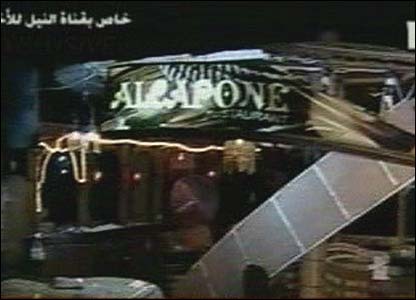
We've talked about our safety a fair amount on this trip, perhaps understandable considering where we've been. I remember a moment in Cairo when we were walking past a large important building surrounded by armed guards called the World Trade somethingorother. As we walked past, an old beat-up car pulled up as close as it could get to the building and a man leaned out. I had a moment of pure fear. But he was only asking for directions from one of the guards.
The only other time I've been really scared was when our bus from Louang Prabang to Vientiane almost skidded out of control on a mountain curve.
But now this. And in a backpacker place. Relatively low-budget. When we went to Amman fairly soon after the blasts there, we assuaged our fear by remembering that we wouldn't be staying at the Hilton and that our small, crappy guesthouse wouldn't be a target.
But Dahab was.
SE Asia is the first non-western part of the world that I've come back to after a prolonged absence. And this Dahab incident is the first time I've been somewhere and then seen it blown to pieces. I guess New Yorkers, Londoners, Madrid-ers and many, many others relate. It's just my first.
Being back has got me thinking about the homogenization of culture as the west penetrates ever deeper into the east, north and south. One night over dinner in Louang Prabang, Anne, Alex, Z and I talked about the foods we miss and crave. I was hard-pressed to come up with anything, finally settling on Mexican cuisine and Kettle Chips. Pai has both. Cravings satisfied? Check.
This homogenization is related to the fact that more and more people are traveling. We talk about why: travel's easier; more places are accessible; travel is more accepted. But not necessarily safer. I once asked my Dad if he felt like the world was going to hell when he was my age. He said, Yes - but it wasn't nearly as bad as it is today.
He knows how to cheer a person up!
I do not mean to be alarmist. This is one incident in a world of travelers who have had perfectly safe days. It's just makes me think.
And considering how hot it is here, there's little else to do. Though the middle of the day is usually too hot even for thought.
April 20, 2006
Reasons to love Laos
An old woman wobbles a tumbler of lao-lao aloft in the vague direction of the companions seated at the table around her, cracks a large gap-toothed grin and collapses onto her nearest neighbor in a fit of giggles. She is one of several thousand drunks in Louang Prabang and all of them appear to be having a good time; there is no threat of the mood deteriorating into angry drunk. What other place can make this claim?
Drag queens grind against poles set up outside a guesthouse facing the Mekong. They are just short of fall-down drunk and it's the middle of the day. One wears a kimono, one a Sadaam mask and green beret, another a peaked chinaman hat and ao dai. I feel like I have traveled back to the Castro for Pride.
Our bus from Louang Prabang to Vientiane plays Asian pop videos that make me want to shoot myself in the foot. They are, it turns out, also karaoke videos. One of the three conductors who started drinking Beer Lao at 8:00am picks up the mic and sings along. Fortunately, he has a decent singing voice. This is the same conductor who offers a giggled two-word explanation for each of our frequent stops: Pee pee.
There is no way to avoid the water - no way to say no, only a way to take it graciously, with a smiled "Sabaidee pi mai!". But most people pour it graciously, making it feel like the blessing it is intended to be. By early afternoon each day, I feel very, very, very blessed. Blessed to the undies.
One afternoon, Anne, Alex, Z and I retreat from the water to an outdoor table at a cafe. We order spring rolls and laap and very chewy beef and mekong seaweed that never shows up and drink vast quantities of beer over several hours of serious card playing that involves wiggling our butts while standing on chairs, quacking like ducks and doing our best impression of Anakin's Noooooooo from Star Wars III. Our tab is $10. Total.
Walking through the night market alone, I realize how different it is to any other market I have ever been in: It is quiet. There is no yelling, no, "Meeeeester, you wan' (fill in the blank)?", no music, just women sitting by their hand-made wares talking quietly with eachother. The hush makes me feel like I'm walking through a temple. All of a sudden, the power goes out and the quiet crowd emits an "Oooooooooh!" in unison. I just have to smile.
And that is what Laos is like: It forces me to smile. Even when I don't feel like it, I smile.
Drag queens grind against poles set up outside a guesthouse facing the Mekong. They are just short of fall-down drunk and it's the middle of the day. One wears a kimono, one a Sadaam mask and green beret, another a peaked chinaman hat and ao dai. I feel like I have traveled back to the Castro for Pride.
Our bus from Louang Prabang to Vientiane plays Asian pop videos that make me want to shoot myself in the foot. They are, it turns out, also karaoke videos. One of the three conductors who started drinking Beer Lao at 8:00am picks up the mic and sings along. Fortunately, he has a decent singing voice. This is the same conductor who offers a giggled two-word explanation for each of our frequent stops: Pee pee.
There is no way to avoid the water - no way to say no, only a way to take it graciously, with a smiled "Sabaidee pi mai!". But most people pour it graciously, making it feel like the blessing it is intended to be. By early afternoon each day, I feel very, very, very blessed. Blessed to the undies.
One afternoon, Anne, Alex, Z and I retreat from the water to an outdoor table at a cafe. We order spring rolls and laap and very chewy beef and mekong seaweed that never shows up and drink vast quantities of beer over several hours of serious card playing that involves wiggling our butts while standing on chairs, quacking like ducks and doing our best impression of Anakin's Noooooooo from Star Wars III. Our tab is $10. Total.
Walking through the night market alone, I realize how different it is to any other market I have ever been in: It is quiet. There is no yelling, no, "Meeeeester, you wan' (fill in the blank)?", no music, just women sitting by their hand-made wares talking quietly with eachother. The hush makes me feel like I'm walking through a temple. All of a sudden, the power goes out and the quiet crowd emits an "Oooooooooh!" in unison. I just have to smile.
And that is what Laos is like: It forces me to smile. Even when I don't feel like it, I smile.
April 15, 2006
Wet
There are a few things in my bag that I haven't used all that much and that I look at on those repack-the-bag occasions and think, Why the hell am I carrying this around? Like our mosquito net; we've used it maybe three times, but on each of those occasions we were exceedingly glad to have it.
And like the dry bag which I unearthed from the bottom of my pack yesterday, trying not to drip into it. It now contains our cameras and money. It is the only thing that I have on me that remains dry. I'm very glad to have it; it has allowed me to take several pictures that can later be used to blackmail my friends and husband. Thank god for dry bags!
And like the dry bag which I unearthed from the bottom of my pack yesterday, trying not to drip into it. It now contains our cameras and money. It is the only thing that I have on me that remains dry. I'm very glad to have it; it has allowed me to take several pictures that can later be used to blackmail my friends and husband. Thank god for dry bags!
April 12, 2006
Elsewhere
I am back in Laos. Back in Louang Prabang. When I was here 5 long years ago I loved it. I still think it's a nice place, though it's very different. There are lots more foreigners. And a night market. And street lights. And fancy cafes serving real coffee and bagels with cream cheese. And I've been here before, even if here has changed. Perhaps that's the main difference; it's no longer new to me.
I read an interesting article by Marcel Theroux in a Newsweek I found in Vientiane. He wrote about travel as the search for Elsewhere, a place that's harder and harder to find in this age of rapid communication. For example, on the road from Vientiane to Louang Prabang we passed tiny villages perched on the side of immense valleys with satellite dishes hooked up to huts with palm-thatch roofs and walls.
And the more one travels, the harder it is to find somewhere really different. When I traveled five years ago, everything felt foreign. It was all new. Being back in Laos proves this point: it's beautiful here, but it doesn't fill me with a tingling sensation of Strange.
This partially explains our reason for going to Africa (the other part being how exotic the word Zanzibar sounded). We were searching for an Elsewhere to experience and call home for a while. But it didn't quite work out like I hoped or expected; it's been much more of a struggle. We've spent lots and lots of time examining ourselves in search of an answer to the question of why - why travel has been this way. The answer lies in the fact that we've changed. We're married, and that makes a huge difference. Marriage is an Elsewhere all of its own - being physically Elsewhere at the same time complicates things. True to form, we're doing too many things at once.
When I stop and think about what I want, it all comes down to a home somewhere. Anywhere! A place of comfort from which to explore this new state I'm in. And that's why we're going to New Zealand for a while. It will be foreign but not too foreign; different, but not too different. There, I think, we can be just married for a while. And that will be enough.
Laos New Year starts tomorrow, though the traditional celebrations (water fights) started several days ago. We bought some water pistols in Bangkok so that we could join in, though they will be rather ineffective against the buckets full of water thrown at us. Yesterday, each of the three main streets had multiple road blocks where people stood waiting to drench all who walked, rode or drove by. And that was two days before New Year. Tomorrow should be madness. I'm looking forward to it.
An Aussie we met in Jordan sent us some pictures, including my new favorite picture of Z:

I just love it.
I read an interesting article by Marcel Theroux in a Newsweek I found in Vientiane. He wrote about travel as the search for Elsewhere, a place that's harder and harder to find in this age of rapid communication. For example, on the road from Vientiane to Louang Prabang we passed tiny villages perched on the side of immense valleys with satellite dishes hooked up to huts with palm-thatch roofs and walls.
And the more one travels, the harder it is to find somewhere really different. When I traveled five years ago, everything felt foreign. It was all new. Being back in Laos proves this point: it's beautiful here, but it doesn't fill me with a tingling sensation of Strange.
This partially explains our reason for going to Africa (the other part being how exotic the word Zanzibar sounded). We were searching for an Elsewhere to experience and call home for a while. But it didn't quite work out like I hoped or expected; it's been much more of a struggle. We've spent lots and lots of time examining ourselves in search of an answer to the question of why - why travel has been this way. The answer lies in the fact that we've changed. We're married, and that makes a huge difference. Marriage is an Elsewhere all of its own - being physically Elsewhere at the same time complicates things. True to form, we're doing too many things at once.
When I stop and think about what I want, it all comes down to a home somewhere. Anywhere! A place of comfort from which to explore this new state I'm in. And that's why we're going to New Zealand for a while. It will be foreign but not too foreign; different, but not too different. There, I think, we can be just married for a while. And that will be enough.
Laos New Year starts tomorrow, though the traditional celebrations (water fights) started several days ago. We bought some water pistols in Bangkok so that we could join in, though they will be rather ineffective against the buckets full of water thrown at us. Yesterday, each of the three main streets had multiple road blocks where people stood waiting to drench all who walked, rode or drove by. And that was two days before New Year. Tomorrow should be madness. I'm looking forward to it.
An Aussie we met in Jordan sent us some pictures, including my new favorite picture of Z:

I just love it.
April 06, 2006
Click!
The further we get from our travels in Africa, the better they become. Funny how time allows us to forget pain. I suppose it's an integral part of our species; without this mechanism, I'm not sure that women would ever get pregnant a second time. And just last night, Z said that he would consider returning to Ethiopia to see Harare and the south. Yet he covers his ears at the mention of Ethiopian food. Humans are strange, strange creatures.
Memories from our trip through East Africa are with me still...
...The Ugandan sky darkening rapidly as a storm approached, the light tinged with yellow and every leaf shaking in the sudden wind. And then a crack of thunder and splash of lightning and all the birds in the trees flying up into the sky...
...A conversation with an Egyptian taxi driver in which we tried to explain the outcome of the last U.S. elections using only hand gestures and the words Bush and Kerry: vigorous thumbs down; palms held upwards as scales; violent head shakes...
...A woman walking down the street in Dar es Salaam catches up with me and utters one word: thief. I look at her, my face a question. She nods her head in the direction of the man behind my left shoulder. I thank her profusely and slow down as she walks on unperturbed...
And there are many more. And not just from Africa. These pictures reminded me of more from our travels through Jordan and Sri Lanka. It's been a wild ride. And we're nearing the end. Just Laos and nothern Thailand and Nice City X with Lev and perhaps some diving with Roberto. All too soon we'll be setting up shop in New Zealand, home to fjords and hot water beaches. And us for a while.
Memories from our trip through East Africa are with me still...
...The Ugandan sky darkening rapidly as a storm approached, the light tinged with yellow and every leaf shaking in the sudden wind. And then a crack of thunder and splash of lightning and all the birds in the trees flying up into the sky...
...A conversation with an Egyptian taxi driver in which we tried to explain the outcome of the last U.S. elections using only hand gestures and the words Bush and Kerry: vigorous thumbs down; palms held upwards as scales; violent head shakes...
...A woman walking down the street in Dar es Salaam catches up with me and utters one word: thief. I look at her, my face a question. She nods her head in the direction of the man behind my left shoulder. I thank her profusely and slow down as she walks on unperturbed...
And there are many more. And not just from Africa. These pictures reminded me of more from our travels through Jordan and Sri Lanka. It's been a wild ride. And we're nearing the end. Just Laos and nothern Thailand and Nice City X with Lev and perhaps some diving with Roberto. All too soon we'll be setting up shop in New Zealand, home to fjords and hot water beaches. And us for a while.
April 02, 2006
Frame
Whoever named Thailand the Land of Smiles must have never visited Sri Lanka. In Sri Lanka I learnt how to lower my guard smile at people again. I didn't realize how closed off Africa and the Middle East had made me. There, smiles were interpreted as invitations to hit on me or sell me things. In Sri Lanka, a smile was just a smile. And the women smiled back. Interacting with women in Muslim countries was very difficult. I had two conversations with women in the several months we spent in Islamic countries, and both occured when I was alone.
But perhaps the person who named Thailand had traveled from Viet-Nam and couldn't believe how friendly the Thai people are. It's really all about where you've been.
This morning, we landed at Bangkok airport after 1.5 hours worth of delays on our 2:25am flight. We were delirious - still are - and trying to function on 1 hour of sleep. At one point I looked at the bus ticket in my hand and thought, I can't believe I never noticed that Thai is written from right to left, like Arabic. Then I realized that I was holding the bus ticket upside down. Yep, another brilliant moment.
I've been thinking a lot on this trip about how everything is relative. (While at UCSC, we had a comic on the Foster Ct fridge for a while that showed some hillbillies with snouts and pigs with noses hanging out on a porch. The caption read, Einstein's theory of the back woods: Everthing's a relative.) A person's reaction to a country or city depends on where they have been. This makes it very hard to get good travel advice. For example, folks I met who had arrived in Cairo from Europe were aghast at the insanity and couldn't wait to leave. One guy I met in Gonder (Ethiopia) had just started traveling through Africa and seemed to be having a great time while we struggled. And several people we met coming from India commented that the roads in Sri Lanka seem so calm.
Even with Cairo behind us, I wouldn't call the roads calm (whatever I may have said in earlier posts). En route from Kandy to the airport, our bus driver pulled out to overtake a truck. Shortly after we moved into the oncoming traffic's lane, the car between us and the truck pulled out in front of us, also wanting to overtake the truck. As it grew close to the truck, the truck pulled out to overtake a van. I think that I can safely say that I've never before been in a bus overtaking a car overtaking a truck overtaking a van. And I'd be content if I wasn't ever again.
Bangkok is strange. There are SO MANY FOREIGNERS. And there are things available on the street corner that we've been looking for for 5 months. I miss the quiet of Sri Lanka and the fact that we white folk were far outnumbered. For those who haven't been to Asia before, Thailand can seem so foreign and exotic. Right now it seems uncomfortably familiar and not like traveling at all. See? It's all about your frame of reference.
On our last day in Sri Lanka, we walked back around Kandy lake and saw two big black and yellow monitor lizards swimming lazily by. And an egret of some kind eating a juicy dragonfly. And a turtle. And a brilliant blue kingfisher doing the Sri Lankan head waggle - the one that means yes and no and maybe. And a really big fish that I named the biglip monkey faced damselcarp. (Fish joke - ha ha ha.) And we watched macaques pick lice off each other and eat them through our bedroom windows at a distance of about 2 ft.
As we walked around looking for a hotel this morning we realized that it's election day here today. It was election day a few days ago in Sri Lanka. And elections loomed large while we were in Israel. And Uganda. And of course, Zanzibar. It's possible that we are just completing a tour of countries that you probably shouldn't visit and that are having elections.
This post was all over the place. Must be the lack of sleep. I think it's time for a nap.
But perhaps the person who named Thailand had traveled from Viet-Nam and couldn't believe how friendly the Thai people are. It's really all about where you've been.
This morning, we landed at Bangkok airport after 1.5 hours worth of delays on our 2:25am flight. We were delirious - still are - and trying to function on 1 hour of sleep. At one point I looked at the bus ticket in my hand and thought, I can't believe I never noticed that Thai is written from right to left, like Arabic. Then I realized that I was holding the bus ticket upside down. Yep, another brilliant moment.
I've been thinking a lot on this trip about how everything is relative. (While at UCSC, we had a comic on the Foster Ct fridge for a while that showed some hillbillies with snouts and pigs with noses hanging out on a porch. The caption read, Einstein's theory of the back woods: Everthing's a relative.) A person's reaction to a country or city depends on where they have been. This makes it very hard to get good travel advice. For example, folks I met who had arrived in Cairo from Europe were aghast at the insanity and couldn't wait to leave. One guy I met in Gonder (Ethiopia) had just started traveling through Africa and seemed to be having a great time while we struggled. And several people we met coming from India commented that the roads in Sri Lanka seem so calm.
Even with Cairo behind us, I wouldn't call the roads calm (whatever I may have said in earlier posts). En route from Kandy to the airport, our bus driver pulled out to overtake a truck. Shortly after we moved into the oncoming traffic's lane, the car between us and the truck pulled out in front of us, also wanting to overtake the truck. As it grew close to the truck, the truck pulled out to overtake a van. I think that I can safely say that I've never before been in a bus overtaking a car overtaking a truck overtaking a van. And I'd be content if I wasn't ever again.
Bangkok is strange. There are SO MANY FOREIGNERS. And there are things available on the street corner that we've been looking for for 5 months. I miss the quiet of Sri Lanka and the fact that we white folk were far outnumbered. For those who haven't been to Asia before, Thailand can seem so foreign and exotic. Right now it seems uncomfortably familiar and not like traveling at all. See? It's all about your frame of reference.
On our last day in Sri Lanka, we walked back around Kandy lake and saw two big black and yellow monitor lizards swimming lazily by. And an egret of some kind eating a juicy dragonfly. And a turtle. And a brilliant blue kingfisher doing the Sri Lankan head waggle - the one that means yes and no and maybe. And a really big fish that I named the biglip monkey faced damselcarp. (Fish joke - ha ha ha.) And we watched macaques pick lice off each other and eat them through our bedroom windows at a distance of about 2 ft.
As we walked around looking for a hotel this morning we realized that it's election day here today. It was election day a few days ago in Sri Lanka. And elections loomed large while we were in Israel. And Uganda. And of course, Zanzibar. It's possible that we are just completing a tour of countries that you probably shouldn't visit and that are having elections.
This post was all over the place. Must be the lack of sleep. I think it's time for a nap.
March 30, 2006
Choo Choo Choo
The buses in Sri Lanka are crowded and full of seats designed for people with only one ass cheek. The drivers think nothing of passing on a blind corner and then will screech to a halt for squirrel. Our few bus rides from Mirissa to Matara and back involved being tossed around as the bus swung wildly all over the narrow road. Not exactly fun. On one memorable ride I got a seat and Z stood next to me. At the next stop, somehow a large woman pushed between Z and I. I spent the rest of the ride with her belly smooshed into the side of my head, not wanting to turn my face for fear of drowning in her cleavage. When Z found out that there was a train from Matara to Kandy that only took 6 hours, we decided to take it rather than risk imminent death in Bus Plunge Horror (thanks to Paul Theroux for that line).
We were not too dismayed when we learnt that the 6 hour ride departed Matara at 1:00pm and arrived in Kandy at 8:00pm. We are, after all, seasoned travelers who expect such things.
The ride between Matara and Colombo mainly traveled the coast. The views of the ocean were beautiful, and some places seem to have been not affected by the tsunami at all. And then we'd pass a long stretch where all that remained of houses were concrete foundations and the occasional walls. One group of boys had turned a concrete slab into a cricket pitch. Many people had built small shacks of crude wooden boards on their old, much larger foundations. Many more people still live in tents donated by various international aid groups, their names stenciled on the blue plastic walls.
In Colombo, we pulled into the station and were immediately swamped by a veritable stampede of office workers trying to get home. I don't know how people managed to get off the train considering how many people were pushing on. The lights and fans quickly went out, leaving us to sweat in a press of bodies.
Outside Colombo, the light began to fade from the sky, the crepuscular mist making the fields look soft enough to pet and the palm trees and distant hills appear blue. It was beautiful, but we were now passing our 6 hour travel time. And then we passed seven hours. And eight. We arrived in Kandy at close to 10pm. There's nothing about a 9hr train ride that feels like 6 hours. It's a known fact that every extra travel hour feels like two.
Apparently, we did not learn our lesson because several days later, we got on a train to Elle, a mountain town 163km from Kandy. This time the 6 hour journey only took 8 hours. Our speed was governed by various signs along the track: 20Km/H; Bad sleepers 10Km/H; and, inexplicably, 15Km/Ph. At one point, and I exagerrate not, I watched a butterfly fly along next to us, keeping apace with the train until it turned away in search of sweeter smells. Yes, we were going as fast as a butterfly.
On the positive side, we met several nice Sri Lankans on the train. The kind of people that insist on buying you all of the food you glance at as it makes its way down the aisles in someone's basket. One man even offered us land upon which to build a house. Sri Lankans are really, really nice.
But we're going to Bangkok anyway. In a couple of days. We planned to go north to Trincomalee but reading about showers that spray mould in $30/night rooms turned us off. Thailand will be good. Easy. Full of other travelers. No pressure to see the sites because we've already seen them. And I hear they have Thai food there. Yum!
We were not too dismayed when we learnt that the 6 hour ride departed Matara at 1:00pm and arrived in Kandy at 8:00pm. We are, after all, seasoned travelers who expect such things.
The ride between Matara and Colombo mainly traveled the coast. The views of the ocean were beautiful, and some places seem to have been not affected by the tsunami at all. And then we'd pass a long stretch where all that remained of houses were concrete foundations and the occasional walls. One group of boys had turned a concrete slab into a cricket pitch. Many people had built small shacks of crude wooden boards on their old, much larger foundations. Many more people still live in tents donated by various international aid groups, their names stenciled on the blue plastic walls.
In Colombo, we pulled into the station and were immediately swamped by a veritable stampede of office workers trying to get home. I don't know how people managed to get off the train considering how many people were pushing on. The lights and fans quickly went out, leaving us to sweat in a press of bodies.
Outside Colombo, the light began to fade from the sky, the crepuscular mist making the fields look soft enough to pet and the palm trees and distant hills appear blue. It was beautiful, but we were now passing our 6 hour travel time. And then we passed seven hours. And eight. We arrived in Kandy at close to 10pm. There's nothing about a 9hr train ride that feels like 6 hours. It's a known fact that every extra travel hour feels like two.
Apparently, we did not learn our lesson because several days later, we got on a train to Elle, a mountain town 163km from Kandy. This time the 6 hour journey only took 8 hours. Our speed was governed by various signs along the track: 20Km/H; Bad sleepers 10Km/H; and, inexplicably, 15Km/Ph. At one point, and I exagerrate not, I watched a butterfly fly along next to us, keeping apace with the train until it turned away in search of sweeter smells. Yes, we were going as fast as a butterfly.
On the positive side, we met several nice Sri Lankans on the train. The kind of people that insist on buying you all of the food you glance at as it makes its way down the aisles in someone's basket. One man even offered us land upon which to build a house. Sri Lankans are really, really nice.
But we're going to Bangkok anyway. In a couple of days. We planned to go north to Trincomalee but reading about showers that spray mould in $30/night rooms turned us off. Thailand will be good. Easy. Full of other travelers. No pressure to see the sites because we've already seen them. And I hear they have Thai food there. Yum!
March 23, 2006
Mmmm...
We just spent 9 days on a beach in southern Sri Lanka. The water was warm. The waves were fun. The sand was soft. The food was cheap. And the best part? No-one tried to sell us anything. It's that last part that separates the merely wonderful from paradise.
We are now in Kandy which everyone from tuk-tuk drivers to travelers has warned us is busy, polluted, loud and full of con-men. Obviously these people have never been to Cairo. After that city, nothing will ever seem busy, polluted or full of touts again. Ever.
You can enjoy our travels vicariously by checking out some new pictures. Not so many this time. Egypt to Jordan. Mouth watering pictures of Sri Lanka will come later.
We are now in Kandy which everyone from tuk-tuk drivers to travelers has warned us is busy, polluted, loud and full of con-men. Obviously these people have never been to Cairo. After that city, nothing will ever seem busy, polluted or full of touts again. Ever.
You can enjoy our travels vicariously by checking out some new pictures. Not so many this time. Egypt to Jordan. Mouth watering pictures of Sri Lanka will come later.
March 12, 2006
Things I will miss, things I won't
I had just relearned how to cross the road by waiting for the little man to turn green when we arrived in Jordan where I have had to unlearn the relearning in order to throw my body in front of moving vehicles, little green and red men be damned.
The roads here aren't nearly as bad as Cairo, which may not be saying all that much. However, when Jordanian motorists see pedestrians in the street they usually slow down, unlike Cairenes who speed up and lean on the horn. People here are on the whole like their friendly Egyptian neighbours but without the wandering hands, the marriage proposals and the You wanna alabaster pyramid? When it comes to ruins and things that are old, however, Egypt does take the cake, perhaps with one exception: in the Archaelogical Museum in Amman they have statues that are 9,000 years old. The only other human things I've seen that age have been bits of rock that some specialist claims are tools but that just look like bits of rock that fell off another bit of rock in just the right way that if you use your imagination you can see that they could once have been used as a knife.
Speaking of rocks, the Nabateans who built Petra apparently listened to their realtors when they said, Location! Location! Location! The facades of the buildings there are nice, but the rock they are carved into is stunning: sandstone in blue, red, white, pink, purple, yellow and cream swirls and stripes. It sometimes resembled abstract art and sometimes big slabs of meat, depending on how long it had been since we last ate. On our second day in Petra we avoided the raging winds laden with scouring Saharan dust by wandering through a side canyon. It was one of the most beautiful natural places I've ever been. At one point, the canyon narrowed to a few feet wide and twisted sinously in waves of colored stone. If you haven't been, you should go.
And tomorrow, we are leaving the cold parts of the world. We fly to Dubai for dinner and then on to Sri Lanka where we'll take a bus to a beach where we can string up our hammocks, remove our layers, open our books and say things like, Why yes! I would like another coconut daquari. I will, however, miss the hummous. I like the hummous. I will not miss herpes, which was listed on a menu in Wadi Musa under the heading, Warm Drinks.
The roads here aren't nearly as bad as Cairo, which may not be saying all that much. However, when Jordanian motorists see pedestrians in the street they usually slow down, unlike Cairenes who speed up and lean on the horn. People here are on the whole like their friendly Egyptian neighbours but without the wandering hands, the marriage proposals and the You wanna alabaster pyramid? When it comes to ruins and things that are old, however, Egypt does take the cake, perhaps with one exception: in the Archaelogical Museum in Amman they have statues that are 9,000 years old. The only other human things I've seen that age have been bits of rock that some specialist claims are tools but that just look like bits of rock that fell off another bit of rock in just the right way that if you use your imagination you can see that they could once have been used as a knife.
Speaking of rocks, the Nabateans who built Petra apparently listened to their realtors when they said, Location! Location! Location! The facades of the buildings there are nice, but the rock they are carved into is stunning: sandstone in blue, red, white, pink, purple, yellow and cream swirls and stripes. It sometimes resembled abstract art and sometimes big slabs of meat, depending on how long it had been since we last ate. On our second day in Petra we avoided the raging winds laden with scouring Saharan dust by wandering through a side canyon. It was one of the most beautiful natural places I've ever been. At one point, the canyon narrowed to a few feet wide and twisted sinously in waves of colored stone. If you haven't been, you should go.
And tomorrow, we are leaving the cold parts of the world. We fly to Dubai for dinner and then on to Sri Lanka where we'll take a bus to a beach where we can string up our hammocks, remove our layers, open our books and say things like, Why yes! I would like another coconut daquari. I will, however, miss the hummous. I like the hummous. I will not miss herpes, which was listed on a menu in Wadi Musa under the heading, Warm Drinks.
February 26, 2006
Then and Now
For four months, we've been slogging our way through Africa. And now, we're in the Land of Milk and Honey, which I humbly suggest be renamed the Land of Chocolate Cake and Cappucino. After a hassle-free week of good food and comfortable living, I find that my tendency to laugh in difficult situations has returned - not that we've had any difficult situations recently. This weekend was spent at the King David Hotel thanks to my wonderful parents-in-law and parents-not-in-law. It was the opposite of difficult. Our room with a view over the Old City was upgraded to a suite with a view over the Old City. We had two TV's, a king size bed with down pillows and comforter, and a wonderfully deep bathtub which I took advantage of twice. It was bubblicious.
In addition to bathing and watching bad movies on TV, we took the rampart walk around the Old City. I've visited many old and beautiful places in my life (Tikal, Angkor Wat, Valley of the Kings, etc.), but none that have permeated the fabric of my consciousness quite like the sites in Jerusalem. While walking through the city last week, Z pointed out that we were on the Via Dolorosa. "So?" I asked in my areligious ignorance. He explained that it's the route Jesus walked carrying his cross. Oh. And the eye of the needle is here, too - as in, pass a camel through the eye of the needle. It's crazy old. And crazy important to so many people.
As for me, I'm discovering, much to the dismay of our bank account, that clothes are important. It's taken me 30 years to accept the fact that I do have feminine tendencies and to admit that I like nice clothes. For four months, I've been wearing the same clothes over and over again. This was particularly problematic in Egypt where the cold made us reticent to remove said clothes so that they could be laundered; let's just say that they got a little narsty. Not only that, but in Egypt I didn't want to look attractive or feminine; I got enough unwelcome attention in my baggy pants and shapeless top. For my birffday (pronounciation care of Raelin), I got new clothes from Miryana, Dad and Zack. I know have cute skirts and tops that do not make me look "big" as one saleswoman put it - this in a boutique near Ben Yehudah where the aformentioned baggy and stained pants were exchanged for a series of beautiful skirts and elegant tops. Both Z and I stood and stared at me, shocked at the difference good tailoring will make.
This would, I believe, be an appropriate moment to heap praise upon my exceptional husband who figured out how to make me happy and who planned this fantastic 30th birthday by e-mail from another country - and managed to keep it all a secret despite my tendancy to read over his shoulder. Thanks also for all of the phone calls and letters and cards and a beautiful red necklace and a pair of ExOfficio underwear and the chocolate fudge and the chocolate bars and photos and NY Times crossword puzzles and the cominc book and the big pink lollipop. It was wonderfully comforting to feel you all so close.
Todah rabah. Shockran. Amaseganallo. Asante sana. Thank you!
In addition to bathing and watching bad movies on TV, we took the rampart walk around the Old City. I've visited many old and beautiful places in my life (Tikal, Angkor Wat, Valley of the Kings, etc.), but none that have permeated the fabric of my consciousness quite like the sites in Jerusalem. While walking through the city last week, Z pointed out that we were on the Via Dolorosa. "So?" I asked in my areligious ignorance. He explained that it's the route Jesus walked carrying his cross. Oh. And the eye of the needle is here, too - as in, pass a camel through the eye of the needle. It's crazy old. And crazy important to so many people.
As for me, I'm discovering, much to the dismay of our bank account, that clothes are important. It's taken me 30 years to accept the fact that I do have feminine tendencies and to admit that I like nice clothes. For four months, I've been wearing the same clothes over and over again. This was particularly problematic in Egypt where the cold made us reticent to remove said clothes so that they could be laundered; let's just say that they got a little narsty. Not only that, but in Egypt I didn't want to look attractive or feminine; I got enough unwelcome attention in my baggy pants and shapeless top. For my birffday (pronounciation care of Raelin), I got new clothes from Miryana, Dad and Zack. I know have cute skirts and tops that do not make me look "big" as one saleswoman put it - this in a boutique near Ben Yehudah where the aformentioned baggy and stained pants were exchanged for a series of beautiful skirts and elegant tops. Both Z and I stood and stared at me, shocked at the difference good tailoring will make.
This would, I believe, be an appropriate moment to heap praise upon my exceptional husband who figured out how to make me happy and who planned this fantastic 30th birthday by e-mail from another country - and managed to keep it all a secret despite my tendancy to read over his shoulder. Thanks also for all of the phone calls and letters and cards and a beautiful red necklace and a pair of ExOfficio underwear and the chocolate fudge and the chocolate bars and photos and NY Times crossword puzzles and the cominc book and the big pink lollipop. It was wonderfully comforting to feel you all so close.
Todah rabah. Shockran. Amaseganallo. Asante sana. Thank you!
February 20, 2006
The Unlearning Curve
Last night, we went out for a late dinner with our wonderful hosts Lorel and Arnie. I had coffee that tasted like coffee and an immense salad full of goat cheese and walnuts. On our walk back, I saw a lull in traffic and stepped out to cross the street. Lorel pulled me back and pointed to the pedestrian light saying, "You walk when the little guy is green." Silly me going all Cairo on the Jerusalem traffic -- which, by the way, people claim is crazy though it looks downright sane to me. I mean, cars generally drive between the lines and use their headlights at night and the horn does not appear to be an integral part of the accelerator. So, yes, I'm relearning how to cross the street. And how to use a stove. And that it's just fine to leave my passport out. And that it's not necessary to wear shoes in the shower. It's very exciting here in Jerusalem.
Also exciting is the fact that we have more pictures to share. Check 'em out.
Also exciting is the fact that we have more pictures to share. Check 'em out.
February 16, 2006
Five Unrelated Thoughts
1. In the Valley of the Kings, we stopped in one tomb to watch two men inject silicon into a crack in the wall using hypodermic syringes. One of the workers was quite friendly and spoke some English. After asking us where we were from, he asked if we were married. He then muttered something about camels and gave us an expectant look, the only indication that he'd just asked us a question. Z shot me a what-the-hell? look. "I think he's asking how many camels you paid for me," I responded. Z chose what he thought would be a high number (45) and immediately realized this was in fact a low number, judging from the expression on the man's face and the fact that he said something involving the number 600. Oops. He next asked how long we'd been married, and then said, "Shildreeen?" When we said, "No" he looked at us aghast, clearly very upset. Having received this reaction before I repeated, "Four months." He smiled and laughed and said, "Soon inshallah". Uh, yeah.
2. There once was a queen named Hatchepsut. When the king died, her son and heir was too young to rule. So she assumed title of pharaoh, even going so far as to don a fake beard. Her son grew up. She did not relinquish her rule. Feeling the title of pharaoh was rightfully his, the son murdered his mother and ascended to the throne. This son scratched out her name in the temples, tore down one of the beautiful pink granite obelisks she'd erected, and surrounded the other with tall sandstone walls so that no-one would see it. In 2006, her name was further dishonored by a certain Troublonian who insisted on calling her Ketchup's Foot. Poor lady.
3. All too often when traveling, I see someone who looks a lot like someone I know, someone who couldn't possibly be wherever it is that I am. For example, I saw Mojo dressed in a turban and dress in the night market in Luxor and I saw Zay somewhere in Uganda. Yesterday, Z saw Kenneth walking down the street near our Cairo hostel. Feeling the burning torch of inspiration, I christened this the Kenneth Syndrome.
4. Cairo parking tips: It is perfectly permissible to park in a lane of traffic and in such a way as to block in several cars that are parked against the curb as long as you leave your car in neutral and don't set the break. If the cars need to leave, they will simply push your car out of the way. Similarly, if a parking spot is too small to fit your car, simply drive up to the bumper of the car ahead of you and push it out of the way. It is preferable that you do not push the car into oncoming traffic or any pedestrians stupid enough to be in your way.
5. We have plans that involve several countries. Tomorrow, we go to Israel. After a couple of weeks, we go to Jordan. Then we fly to Dubai where we spend several hours. And then it's on to Colombo, Sri Lanka. I hear it's warm there.
2. There once was a queen named Hatchepsut. When the king died, her son and heir was too young to rule. So she assumed title of pharaoh, even going so far as to don a fake beard. Her son grew up. She did not relinquish her rule. Feeling the title of pharaoh was rightfully his, the son murdered his mother and ascended to the throne. This son scratched out her name in the temples, tore down one of the beautiful pink granite obelisks she'd erected, and surrounded the other with tall sandstone walls so that no-one would see it. In 2006, her name was further dishonored by a certain Troublonian who insisted on calling her Ketchup's Foot. Poor lady.
3. All too often when traveling, I see someone who looks a lot like someone I know, someone who couldn't possibly be wherever it is that I am. For example, I saw Mojo dressed in a turban and dress in the night market in Luxor and I saw Zay somewhere in Uganda. Yesterday, Z saw Kenneth walking down the street near our Cairo hostel. Feeling the burning torch of inspiration, I christened this the Kenneth Syndrome.
4. Cairo parking tips: It is perfectly permissible to park in a lane of traffic and in such a way as to block in several cars that are parked against the curb as long as you leave your car in neutral and don't set the break. If the cars need to leave, they will simply push your car out of the way. Similarly, if a parking spot is too small to fit your car, simply drive up to the bumper of the car ahead of you and push it out of the way. It is preferable that you do not push the car into oncoming traffic or any pedestrians stupid enough to be in your way.
5. We have plans that involve several countries. Tomorrow, we go to Israel. After a couple of weeks, we go to Jordan. Then we fly to Dubai where we spend several hours. And then it's on to Colombo, Sri Lanka. I hear it's warm there.
February 12, 2006
In the Black
Travel is a series of ups and downs, as everyone who's ever left their home will know. It seems like most of our time in Africa has been in the red - more downs that ups. Egypt has been in the black.
We organized a felucca trip from Aswan to Edfu for us and 6 other travelers. It was supposed to be three days and three nights. On the first day we had been sailing for no more than 20 minutes when the top boom snapped, forcing us to stop at the northern limits of Aswan town to have it repaired. Our captain said, "Half an hour." Maybe he meant until lunch because the repairs took all day. Five hours later, we set sail again. A couple of hours later, at the twilit end of sunset, the boom snapped again. This time the repair did only take half an hour. We sailed long into the night under a 3/4 moon illuminating the tall sail which arced above us to the few visible stars, all of us wearing everything in our bags and swaddled in blankets against the cold. We spend the night tied up to the river bank near a large pack of dogs that were almost hoarse from barking - almost but not hoarse. I think I slept about three hours, huddled under blankets next to my shivering husband. Somehow, it had managed to be a good day.
The next day was hazy, misty and cold. We played games, chatted, laughed, ridiculed one another and our countries, ate hot food, sipped hot tea with lots of sugar, drank beers that were too cold to hold, and sang loudly and badly. Our second night was much warmer, and the third day was clear and sunny. I was able to remove my goretex jacket. Around noon the meuzzin began their Friday call to prayer and our captain announced that we were in Edfu. A day early. There was much confusion. How did three days three nights become two nights and three half days of sailing??? My bladder took precedence over any discussions and I, with the three other women de-boated in search of a bathroom. We were immediately surrounded by a group of boys insisting that a bathroom was "Thees way" and pointing in about five different directions. We followed for a while and then decided to ditch them and try our luck asking at one of the nearby flotels. One of the young boys grabbed inappropriately at our Austrian "tea maiden" who turned and punched him hard. Meanwhile, our crowd of followers was growing: carriage drivers offered us rides; taxi drivers offered us rides; Ahwa owners offered us tea and coffee and soda; vendors tried to sell us postcards and kalabiyas and water pipes. It was an immediate, graceless transition from relaxation to tout-filled travel. I was not happy. I wanted to stay on the Nile, even with the cold eating away at my joints and making me feel like a 60 year old arthritic woman.
Declining offers of carriages and taxis, we walked through Edfu to the Temple of Horus, an immense structure most of which is still standing. Carvings or gods and pharoahs and wives and hieroglyphics. Immense columns. Graffiti in Greek. A colorful painting of a woman with a skirt of blue stars on a ceiling. A carving of Isis giving birth to Horus. And masses of tourists giving me dirty looks for elbowing my way through their groups which had completely blocked all passage through the temple.
Back to the felucca for bags and to try to explain to our captain that we were not paying the last 200 pounds we owed because the trip was 2.5 days, 2 nights instead of 3 days 3 nights. Much confusion. Much tension. Much ickiness. But it all sorted itself out... I think.
Then on to the bus station, with a following band of boys and carriage drivers telling us it was "Thees way" and pointing in about five different directions. Eventually we discovered we had to walk across the river to the main road where we would hopefully flag down a bus at the police checkpoint. When we arrived at the checkpoint 4 hot kilometers later and asked about a bus to Luxor we were told, "Maybe" by an officer with a face crinkled in doubt. Astonishingly, a bus appeared after only about 20 minutes - and we were allowed to board. There were even seats. And a movie without sound - but it was "Air Force One" so sound wasn't necessary. We stopped for half an hour in a cafe somewhere and caught the beginning of the Africa Nations Cup final: Egypt vs. Cote d'Ivoire. We left and the score was 0-0.
The bus dropped us off somewhere near Luxor, on a dark street in the countryside. Bilge Pump Bob immediately ran off to check the score: still 0-0. A taxi appeared, as they tend to do, and the driver with attendant crowd of men asked us for a ridiculous price, as they tend to do. He also claimed to have heard of the hotel we were aiming for, and then proceeded to stop to ask for directions at least three times. We were growing more and more irritable, wanting to be watching the game and/or showering and/or eating. We found the hotel which amazingly had enough rooms for all 8 of us, rooms that were clean and affordable. Most importantly, there was a TV in the lobby - and the score was still 0-0. The game went to penalty kicks when the Egypt goalkeeper stopped not one but two balls, winning the game for Egypt. Oh the honking celebrations! The flag waving! The shouts of Masr! The mad, sober revelry! I can only imagine that all of Cairo was turned into one hootin' tootin' parking lot.
We found a restaurant for dinner which served $1.25 roast chicken and $2.00 berbekio (bbq) which was delicious. Then we all collapsed into our warm beds with comfortable pillows realizing that despite the downs of the previous few days, we were still in the black.
We organized a felucca trip from Aswan to Edfu for us and 6 other travelers. It was supposed to be three days and three nights. On the first day we had been sailing for no more than 20 minutes when the top boom snapped, forcing us to stop at the northern limits of Aswan town to have it repaired. Our captain said, "Half an hour." Maybe he meant until lunch because the repairs took all day. Five hours later, we set sail again. A couple of hours later, at the twilit end of sunset, the boom snapped again. This time the repair did only take half an hour. We sailed long into the night under a 3/4 moon illuminating the tall sail which arced above us to the few visible stars, all of us wearing everything in our bags and swaddled in blankets against the cold. We spend the night tied up to the river bank near a large pack of dogs that were almost hoarse from barking - almost but not hoarse. I think I slept about three hours, huddled under blankets next to my shivering husband. Somehow, it had managed to be a good day.

The next day was hazy, misty and cold. We played games, chatted, laughed, ridiculed one another and our countries, ate hot food, sipped hot tea with lots of sugar, drank beers that were too cold to hold, and sang loudly and badly. Our second night was much warmer, and the third day was clear and sunny. I was able to remove my goretex jacket. Around noon the meuzzin began their Friday call to prayer and our captain announced that we were in Edfu. A day early. There was much confusion. How did three days three nights become two nights and three half days of sailing??? My bladder took precedence over any discussions and I, with the three other women de-boated in search of a bathroom. We were immediately surrounded by a group of boys insisting that a bathroom was "Thees way" and pointing in about five different directions. We followed for a while and then decided to ditch them and try our luck asking at one of the nearby flotels. One of the young boys grabbed inappropriately at our Austrian "tea maiden" who turned and punched him hard. Meanwhile, our crowd of followers was growing: carriage drivers offered us rides; taxi drivers offered us rides; Ahwa owners offered us tea and coffee and soda; vendors tried to sell us postcards and kalabiyas and water pipes. It was an immediate, graceless transition from relaxation to tout-filled travel. I was not happy. I wanted to stay on the Nile, even with the cold eating away at my joints and making me feel like a 60 year old arthritic woman.
Declining offers of carriages and taxis, we walked through Edfu to the Temple of Horus, an immense structure most of which is still standing. Carvings or gods and pharoahs and wives and hieroglyphics. Immense columns. Graffiti in Greek. A colorful painting of a woman with a skirt of blue stars on a ceiling. A carving of Isis giving birth to Horus. And masses of tourists giving me dirty looks for elbowing my way through their groups which had completely blocked all passage through the temple.
Back to the felucca for bags and to try to explain to our captain that we were not paying the last 200 pounds we owed because the trip was 2.5 days, 2 nights instead of 3 days 3 nights. Much confusion. Much tension. Much ickiness. But it all sorted itself out... I think.
Then on to the bus station, with a following band of boys and carriage drivers telling us it was "Thees way" and pointing in about five different directions. Eventually we discovered we had to walk across the river to the main road where we would hopefully flag down a bus at the police checkpoint. When we arrived at the checkpoint 4 hot kilometers later and asked about a bus to Luxor we were told, "Maybe" by an officer with a face crinkled in doubt. Astonishingly, a bus appeared after only about 20 minutes - and we were allowed to board. There were even seats. And a movie without sound - but it was "Air Force One" so sound wasn't necessary. We stopped for half an hour in a cafe somewhere and caught the beginning of the Africa Nations Cup final: Egypt vs. Cote d'Ivoire. We left and the score was 0-0.
The bus dropped us off somewhere near Luxor, on a dark street in the countryside. Bilge Pump Bob immediately ran off to check the score: still 0-0. A taxi appeared, as they tend to do, and the driver with attendant crowd of men asked us for a ridiculous price, as they tend to do. He also claimed to have heard of the hotel we were aiming for, and then proceeded to stop to ask for directions at least three times. We were growing more and more irritable, wanting to be watching the game and/or showering and/or eating. We found the hotel which amazingly had enough rooms for all 8 of us, rooms that were clean and affordable. Most importantly, there was a TV in the lobby - and the score was still 0-0. The game went to penalty kicks when the Egypt goalkeeper stopped not one but two balls, winning the game for Egypt. Oh the honking celebrations! The flag waving! The shouts of Masr! The mad, sober revelry! I can only imagine that all of Cairo was turned into one hootin' tootin' parking lot.
We found a restaurant for dinner which served $1.25 roast chicken and $2.00 berbekio (bbq) which was delicious. Then we all collapsed into our warm beds with comfortable pillows realizing that despite the downs of the previous few days, we were still in the black.
January 31, 2006
Not It
That last post was awful chipper, wasn't it? I'm still fairly chipper, though the freezing afternoon winds that plague this supposed-to-be-warm beach town are wearing me down. This is not the relaxing beach time I had in mind. I haven't dared do more than dabble my toes in the water while looking for brittle stars (one of which blew out of my hand, smacking our friend Tamr in the face before landing back in the water). And as for diving - forget it! I used to do cold, miserable dives for free; hell if I'm paying for them! Yes, we appear to have run smack-dab into winter. In January! The nerve!
I have spent a lot of time thinking about what it is that I'm doing, what I want to be doing, and what I think I should be doing - all while huddled in our room under blankets looking across the choppy waters at Saudi Arabia. Rather than traveling to see/experience things, I'm traveling to find somewhere else to live (for a while). I keep forgetting this and going off to see the sites which I just can't enjoy. See previous post about Ethiopia for more details. Last time I traveled, I found lots of places that I could have imagined staying (for a while, anyway). This trip has been a series of, Not Heres. And while ruling things out is valuable, it doesn't actually get me any closer to figuring out where I want to be. It's frustrating. And cold. Did I mention that it's cold in the northern hemisphere in January? Well, it is. And the $0.50 falafels, while delicious, are small consolation.
I have spent a lot of time thinking about what it is that I'm doing, what I want to be doing, and what I think I should be doing - all while huddled in our room under blankets looking across the choppy waters at Saudi Arabia. Rather than traveling to see/experience things, I'm traveling to find somewhere else to live (for a while). I keep forgetting this and going off to see the sites which I just can't enjoy. See previous post about Ethiopia for more details. Last time I traveled, I found lots of places that I could have imagined staying (for a while, anyway). This trip has been a series of, Not Heres. And while ruling things out is valuable, it doesn't actually get me any closer to figuring out where I want to be. It's frustrating. And cold. Did I mention that it's cold in the northern hemisphere in January? Well, it is. And the $0.50 falafels, while delicious, are small consolation.
January 26, 2006
It's Different Here
Egypt is different to Ethiopia. For starters, we're having fun in Egypt - and we're eating. Today we mailed a package; it took about 20 minutes. The post office employee not only gave us a box and taped it up for us, but also gave Z a cheese sandwich. In Addis, it took us over 45 minutes to mail a package to Aus, time we spent wandering between window 2 who sent us to window 15 who sent us back to window 2 who insisted that we go to window 15 who told us that window 2 was the only place to help us. It was not fun. Cairo is fun. When we walk down the streets we hear, Welcome to Cairo! rather than, Give me pen. And they have the pyramids here. Them's big piles of rocks; much more impressive than big rocks.
Last night we went to the Morocco vs. Egypt match of the Africa Nations Cup. There was at least one cop in riot gear for every five people. Another difference between Ethiopia and Egypt: there are so many more police here. Maybe that's because there are things worth stealing in Egypt.
Z and I are discovering just how much we don't like the tourist sites. And how much we do like shops cluttered with dusty "antiques", even if they apply dust every day just to make the stuff look old. We travel well together; it's a wonderful thing. We're able to realize this and appreciate it now that we're in Egypt. Travel is fun again.
I am happy. Excited even. Renewed and rejeuvenated. By Cairo! Who woulda thunk? Other travelers that have been to Cairo have tried to minimize their time here saying it's too polluted and crazy. Polluted it certainly is; crazy too. But it's also lively and full of friendly strangers who do things like buy us lunch just because we're sitting at the next table over and are foreign.
Strikes against Cairo include the excessive usage of the automobile horn. Right now, in the background, it's a veritable symphonie de honk. The streets are madness; crossing them requires faith and fast footwork. On our first day in Cairo, we stood at the crosswalk staring into the mass of cars and wondering how we would ever get cross. As we stood there, a man passed us riding a bicycle and deftly wove his way through the traffic balancing an immense tray of pita bread on his head.
Tomorrow, we're going to Dahab where there will be less honking and hopefully less black-booger-inducing smog. We plan to relax for as long as it takes us to relax. Then we'll see some sights down on the Nile and then... Well, we're not sure what will we'll do after that. But then again, we're never really sure what's going to happen next. Especially in Egypt.
Last night we went to the Morocco vs. Egypt match of the Africa Nations Cup. There was at least one cop in riot gear for every five people. Another difference between Ethiopia and Egypt: there are so many more police here. Maybe that's because there are things worth stealing in Egypt.
Z and I are discovering just how much we don't like the tourist sites. And how much we do like shops cluttered with dusty "antiques", even if they apply dust every day just to make the stuff look old. We travel well together; it's a wonderful thing. We're able to realize this and appreciate it now that we're in Egypt. Travel is fun again.
I am happy. Excited even. Renewed and rejeuvenated. By Cairo! Who woulda thunk? Other travelers that have been to Cairo have tried to minimize their time here saying it's too polluted and crazy. Polluted it certainly is; crazy too. But it's also lively and full of friendly strangers who do things like buy us lunch just because we're sitting at the next table over and are foreign.
Strikes against Cairo include the excessive usage of the automobile horn. Right now, in the background, it's a veritable symphonie de honk. The streets are madness; crossing them requires faith and fast footwork. On our first day in Cairo, we stood at the crosswalk staring into the mass of cars and wondering how we would ever get cross. As we stood there, a man passed us riding a bicycle and deftly wove his way through the traffic balancing an immense tray of pita bread on his head.
Tomorrow, we're going to Dahab where there will be less honking and hopefully less black-booger-inducing smog. We plan to relax for as long as it takes us to relax. Then we'll see some sights down on the Nile and then... Well, we're not sure what will we'll do after that. But then again, we're never really sure what's going to happen next. Especially in Egypt.
January 23, 2006
Pretty as a Picture
We have traveled a long, long way. I realize that now, looking at these pictures. We've seen some really beautiful things, and collected a lot of dust and mud to go along with the stories. The photos go way back to a certain monkey-eating incident in Tanzania. They chronicle our times in Uganda and Ethiopia and even the beginning of our time here in Cairo. Happy vicarious traveling!
January 19, 2006
My barrel is full
This wonderful phrase is the German equivalent of, I've had it up to here. It's a colorful way to describe the lack of patience I've had of late. I think that three months travel through Africa is the equivalent of a year in Asia. So, I'm tired. We are in the land of fast internets now (Cairo) and so will try to keep this blog more updated than it's been recently, thereby stemming the flood of complaints. Without further ado...
Ethiopia. From the air, I can see that the horizon is rimmed by a thick layer of brown. Not smog: dust. The terrain is a series of brown plateaus carved by deep ravines. At the bottom flow wide rivers of dry, grey stones. It is hard to imagine that there has ever been or ever will be enough water to cut such deep gorges. Like the air, the ground is also dusty. Most of the fields lie fallow, a collection of dry stalks and rocks. Most of the rivers are completely dry. In one riverbed, I see women washing clothing in a puddle - all the water that remains. The rains don't arrive until May and everyone is predicting massive droughts for the Horn and East Africa. We take short showers every other day.
The roads are impressive feats of engineering carved up and down gorges the size of the grand canyon. The buses are less impressive being about 40 years old and full of dust. On the 11-hour trip from Gonder to Shire, I spent much of the time with my sarong wrapped around my mouth and nose to facilitate breathing. It was like a mini-burning-man dust storm inside the bus. In addition to dust, the air is filled with the sound of Ethiopian music played on cassettes that have been baked on the dashboard for months. Z and I joke that the songs are hits by such memorable groups as The Strangling Cats, The Gurgling Dervishes and The Drowning Eunechs. A man seated behind us complains loudly and asks the conductor to turn off the music (even though all was spoken in Amharic, the meaning was clear). The bus goes silent - for at least five minutes. And then the music starts again. We suffer on through a land with very little green - what green exists is a dusty shade of olive; there's no freshness. It would be a hard land to live in; I now understand what people mean when they say that Africa is a mess.
There are so many poor people here and so many of them are disabled by age or polio or elaphantitus or other disfiguring diseases. Many are amputees. All are beggars. We make it a habit to not give money to children or people who look like they could work (not that there are any jobs to be had), saving our coins instead for the old and disabled. One older man stops us on the cobbled street of Lalibela to ask for change. He sports a dusty grey turban and is leaning heavily on a staff. Z digs into his pocket and gives him some change - not much, but something. The man looks at the coins in his palm, makes a face, shakes his finger at Z and says something at us in Amharic. The meaning is clear: somehow we have insulted him by the smallness of our donation. Outraged, Z takes the money back and we walk off thinking, Don't beg if you don't need whatever you can get. This is not the only time this happens. But it is balanced by moments where people seem grateful. Also in Lalibela, we see a woman in front of us crawling because she has no feet. Without her asking, we give her some money. Her face lights up with joy and immense gratitude. She seems so happy; we gave so little. I appreciate her for combatting my growing cynicism.
On an island in Lake Tana near Bahar Dar we walk up a rocky trail to a monastery. The round church in the compound has dark brown dirt walls flecked with hay; they seem velvety. The center of the roof is topped with a cross and bells that tinkle delicately in the breeze. Three of us pay the guard to go in. The doors are solid wood, tall - the kind that fold in half and then push open. As they open, sunlight hits the walls of the inner sanctuary which are painted with brilliant colors: saints and angels and more saints with afros in purples, greens, yellow, reds, oranges and blues. The colors have the vivacity of central America. We recognize a couple of figures: here's the saint who was a cannibal; there's the saint whose leg fell of and then flew up to heaven. It's brilliant and beautiful and completely unexpected.
We reach Lalibela as our barrels begin to overflow. It's a poor town on a steep hill. The nicest house we see doesn't have glass in its windows. And the churches! Carved from solid rock! Some are still partly attached to the rock around them; some have been excised and stand as monoliths. The walls are pocked by chisel marks; there are columns and arches and complicated drainage systems and one tunnel that we walk through that is completely pitch black. I walk with one hand on the ceiling, one hand on the wall. We emerge into the light tingling with the thrill of it. Walking through yet another giant monument to God, I am astounded as the lengths to which people will go because of faith.
I am also astounded as to the lengths we will go to avoid talking to people. Most are touts and children selling things, though I'm sure we also spurn some well-meaning folk. On one memorable walk, when asked where he is from, Z replies, "Venus." The children seem puzzled for a moment and ask, pointing at the sky, "Venus?" Z assures them that yes, they understand him correctly; he is from Venus. "Did you come by rocket?" they ask. "No," Z replies and then pantomimes flying and climbing a rope. I am in hysterics. The children are also laughing. They they ask Z what he does. He explains that he's a vampire (a word they instantly understand), which is why he cannot buy any of the leather or silver crosses that they are hawking. At another time, I pretend that I don't speak English and discover just how hard it is to not react to people when they are talking to you. One group of men lounging by a wall in Aksum asks us if we need a guide. When we say no thank you, they ask, "Would you like to be heckled?" We laugh and walk on.
So for all the moments of exasperation and the lack of culinary delight, there have also been funny moments and beautiful things to see. The churches of Lalibela; the castles of Gonder. This country is certainly worth visiting if you have a two week holiday. Just remember to bring vitamins.
Ethiopia. From the air, I can see that the horizon is rimmed by a thick layer of brown. Not smog: dust. The terrain is a series of brown plateaus carved by deep ravines. At the bottom flow wide rivers of dry, grey stones. It is hard to imagine that there has ever been or ever will be enough water to cut such deep gorges. Like the air, the ground is also dusty. Most of the fields lie fallow, a collection of dry stalks and rocks. Most of the rivers are completely dry. In one riverbed, I see women washing clothing in a puddle - all the water that remains. The rains don't arrive until May and everyone is predicting massive droughts for the Horn and East Africa. We take short showers every other day.
The roads are impressive feats of engineering carved up and down gorges the size of the grand canyon. The buses are less impressive being about 40 years old and full of dust. On the 11-hour trip from Gonder to Shire, I spent much of the time with my sarong wrapped around my mouth and nose to facilitate breathing. It was like a mini-burning-man dust storm inside the bus. In addition to dust, the air is filled with the sound of Ethiopian music played on cassettes that have been baked on the dashboard for months. Z and I joke that the songs are hits by such memorable groups as The Strangling Cats, The Gurgling Dervishes and The Drowning Eunechs. A man seated behind us complains loudly and asks the conductor to turn off the music (even though all was spoken in Amharic, the meaning was clear). The bus goes silent - for at least five minutes. And then the music starts again. We suffer on through a land with very little green - what green exists is a dusty shade of olive; there's no freshness. It would be a hard land to live in; I now understand what people mean when they say that Africa is a mess.
There are so many poor people here and so many of them are disabled by age or polio or elaphantitus or other disfiguring diseases. Many are amputees. All are beggars. We make it a habit to not give money to children or people who look like they could work (not that there are any jobs to be had), saving our coins instead for the old and disabled. One older man stops us on the cobbled street of Lalibela to ask for change. He sports a dusty grey turban and is leaning heavily on a staff. Z digs into his pocket and gives him some change - not much, but something. The man looks at the coins in his palm, makes a face, shakes his finger at Z and says something at us in Amharic. The meaning is clear: somehow we have insulted him by the smallness of our donation. Outraged, Z takes the money back and we walk off thinking, Don't beg if you don't need whatever you can get. This is not the only time this happens. But it is balanced by moments where people seem grateful. Also in Lalibela, we see a woman in front of us crawling because she has no feet. Without her asking, we give her some money. Her face lights up with joy and immense gratitude. She seems so happy; we gave so little. I appreciate her for combatting my growing cynicism.
On an island in Lake Tana near Bahar Dar we walk up a rocky trail to a monastery. The round church in the compound has dark brown dirt walls flecked with hay; they seem velvety. The center of the roof is topped with a cross and bells that tinkle delicately in the breeze. Three of us pay the guard to go in. The doors are solid wood, tall - the kind that fold in half and then push open. As they open, sunlight hits the walls of the inner sanctuary which are painted with brilliant colors: saints and angels and more saints with afros in purples, greens, yellow, reds, oranges and blues. The colors have the vivacity of central America. We recognize a couple of figures: here's the saint who was a cannibal; there's the saint whose leg fell of and then flew up to heaven. It's brilliant and beautiful and completely unexpected.
We reach Lalibela as our barrels begin to overflow. It's a poor town on a steep hill. The nicest house we see doesn't have glass in its windows. And the churches! Carved from solid rock! Some are still partly attached to the rock around them; some have been excised and stand as monoliths. The walls are pocked by chisel marks; there are columns and arches and complicated drainage systems and one tunnel that we walk through that is completely pitch black. I walk with one hand on the ceiling, one hand on the wall. We emerge into the light tingling with the thrill of it. Walking through yet another giant monument to God, I am astounded as the lengths to which people will go because of faith.
I am also astounded as to the lengths we will go to avoid talking to people. Most are touts and children selling things, though I'm sure we also spurn some well-meaning folk. On one memorable walk, when asked where he is from, Z replies, "Venus." The children seem puzzled for a moment and ask, pointing at the sky, "Venus?" Z assures them that yes, they understand him correctly; he is from Venus. "Did you come by rocket?" they ask. "No," Z replies and then pantomimes flying and climbing a rope. I am in hysterics. The children are also laughing. They they ask Z what he does. He explains that he's a vampire (a word they instantly understand), which is why he cannot buy any of the leather or silver crosses that they are hawking. At another time, I pretend that I don't speak English and discover just how hard it is to not react to people when they are talking to you. One group of men lounging by a wall in Aksum asks us if we need a guide. When we say no thank you, they ask, "Would you like to be heckled?" We laugh and walk on.
So for all the moments of exasperation and the lack of culinary delight, there have also been funny moments and beautiful things to see. The churches of Lalibela; the castles of Gonder. This country is certainly worth visiting if you have a two week holiday. Just remember to bring vitamins.
December 21, 2005
update in five movements
1. While hiking in Arusha National Park, Tanzania our guide told us what to do if a buffalo charges: lie down. That way their horns can't get underneath you. This advice assumes you would rather be trampled to death than gored to death. Tough choice, that. While hiking in Murchison National Park, Uganda we had the incredible good fortune of coming across a family of about 20 chimpanzees. Some were in the trees, others on the ground about 10m away through fairly thick bush. Squatting next to the guide, he pointed at a male on the ground and whispered, "That one is rough." "Rough?" I asked. "Yes - mean." I asked what one should do if faced with an agressive chimp and was assured that with a group of our size (Z and our guide had encountered a European couple and their guide), a chimp wouldn't act agressively. "But what if you're alone? What do you do if you're alone?" I pressed. The guides looked at me like I was crazy and said simply, "Don't."
2. Sleep is not treated with the same respect here as in other parts of the world. For example, it is perfectly acceptable to honk your horn repeatedly at 2:00am. Holding conversations at full volume in hotel courtyards at 4:30am is just fine. Radios at 3:15am? No problem! On the night bus from Mbale, Uganda to Nairobi, Kenya I learned that shrieking with laughter at midnight on a darkened bus is also perfectly acceptable. I did manage to fall asleep eventually only to be awoken by the bus bumping and swaying as it progressed down what was obviously a windy dirt road. I stuck my head into the aisle and peered out the front windows. I discovered that we were actually on a straight road - a paved, straight road. It had apparently last been resurfaced in 1936. Our bus was navigating an impressive slalom course around the axle-breaking potholes. I watched until I realized that I was gripping the arm rest tightly and tensing my jaw everytime we swayed precariously. I decided it was better to put my eye mask back on and pretend that we were on a mountain road.
3. You have probably by now read about the monkey-eating chronicles. Last night we went to Carnivore, a restaurant that would strike horror into the heart of every vegetarian. I learned that I don't like crocodile - fish should be fishy and meat should be meaty. Fishy meat is not a good thing. Camel is unsurprisingly chewy and remarkably flavorless. Ostrich meatballs are quite good. Lamb still remains one of my favorite carnivoric indulgences.
In other culinary news, I have developped a taste for matooke, one of the staples of the Ugandan diet. It's cooked green banana mush, usually served with beans and cabbage. This may explain the lack of East African restaurants in America. But really, it's not that bad.
4. In Sipi, Uganda we had dinner at the restaurant in town which was also the pub. Picture a small room with ancient, dusty chairs arranged around a low formica table and unpainted concrete walls with ripped beer ads and faded religious calendars tacked up at strange angles. Across the doorway swung a "beaded" curtain made from bent bottle caps and blue twine. It was here that we got into a discussion with three men about AIDS. One man, the youngest at about 20, asked if it's true that condoms cause cancer. We emphatically denied this vicious rumor, drawing all the authority we could from the fact that I'm a scientist and American. Hopefully the young man was convinced and will tell his friends.
That evening was the first time in two months that I have felt comfortable, welcomed and at ease with locals. The conversation was motivated by mutual interest, not money. It was fantastic. It made me aware, however, of the things that I miss. I'm looking forward to finding a home somewhere - to feeling at home somewhere.
5. In three hours we fly to Addis Abbaba, Ethiopia. I think it's going to be very different. At least I know that I like Ethiopian food.
2. Sleep is not treated with the same respect here as in other parts of the world. For example, it is perfectly acceptable to honk your horn repeatedly at 2:00am. Holding conversations at full volume in hotel courtyards at 4:30am is just fine. Radios at 3:15am? No problem! On the night bus from Mbale, Uganda to Nairobi, Kenya I learned that shrieking with laughter at midnight on a darkened bus is also perfectly acceptable. I did manage to fall asleep eventually only to be awoken by the bus bumping and swaying as it progressed down what was obviously a windy dirt road. I stuck my head into the aisle and peered out the front windows. I discovered that we were actually on a straight road - a paved, straight road. It had apparently last been resurfaced in 1936. Our bus was navigating an impressive slalom course around the axle-breaking potholes. I watched until I realized that I was gripping the arm rest tightly and tensing my jaw everytime we swayed precariously. I decided it was better to put my eye mask back on and pretend that we were on a mountain road.
3. You have probably by now read about the monkey-eating chronicles. Last night we went to Carnivore, a restaurant that would strike horror into the heart of every vegetarian. I learned that I don't like crocodile - fish should be fishy and meat should be meaty. Fishy meat is not a good thing. Camel is unsurprisingly chewy and remarkably flavorless. Ostrich meatballs are quite good. Lamb still remains one of my favorite carnivoric indulgences.
In other culinary news, I have developped a taste for matooke, one of the staples of the Ugandan diet. It's cooked green banana mush, usually served with beans and cabbage. This may explain the lack of East African restaurants in America. But really, it's not that bad.
4. In Sipi, Uganda we had dinner at the restaurant in town which was also the pub. Picture a small room with ancient, dusty chairs arranged around a low formica table and unpainted concrete walls with ripped beer ads and faded religious calendars tacked up at strange angles. Across the doorway swung a "beaded" curtain made from bent bottle caps and blue twine. It was here that we got into a discussion with three men about AIDS. One man, the youngest at about 20, asked if it's true that condoms cause cancer. We emphatically denied this vicious rumor, drawing all the authority we could from the fact that I'm a scientist and American. Hopefully the young man was convinced and will tell his friends.
That evening was the first time in two months that I have felt comfortable, welcomed and at ease with locals. The conversation was motivated by mutual interest, not money. It was fantastic. It made me aware, however, of the things that I miss. I'm looking forward to finding a home somewhere - to feeling at home somewhere.
5. In three hours we fly to Addis Abbaba, Ethiopia. I think it's going to be very different. At least I know that I like Ethiopian food.
December 08, 2005
Bombs
No, no, no. Not that kind of bomb! I'm talking about guava bombs. And believe me, when a monkey or hornbill drops a guava from a tall tree onto a tin roof, the effect is as shocking as a bomb - though perhaps not as destructive, unless you're the guava.
We rented a lovely cabin with a nice tin roof under a tall guava tree by the shores of a crater lake near Fort Portal, Uganda. There were lots of monkeys and lots of hornbills, and therefore lots of guava bombs. The ones in the middle of the night were the worst. There's nothing quite like waking up suddenly to what sounds like a shotgun being discharged right above your bed!
I spent a morning lying in a hammock watching red colobus monkeys in the trees across the lake while Z and our Canadian travel companion, Frances, went for a walk. All was still until a tree rustled violently and a small brown body appeared in mid-air, hurtling from one tree to another. In this fashion, the monkeys would cross gaps of about 30m. On my side of the lake, a curious black & white colobus descended low into a nearby tree to stare at me with its grumpy-old-man face. Behind me, the crash of guavas onto tin let me know that hornbills were about. Their wingbeats sounded as loud as small helicopters. With so much noisy wildlife (including toads that at night sang a chorus of belches!), the lake wasn't exactly peaceful - but it was relaxing.
From Lake Nkurubu, we moved on to Lake Bunyoni by bus. I fared better than Z, actually getting a seat - but one so cramped that several of my toes fell asleep. In some places, the road was under construction which meant that we detoured onto side roads - really more like tracks parallel to and below the real road. I caught a glimpse of the first detour through the crush of people around my seat and was dismayed: thick, black mud, a deep and wide puddle, and tire tracks that seemed to slide all over the place. "We're going to get stuck for sure," I thought. Seeing the look on my face, a woman seated near me (by seated, I mean perched on the railing above the stairwell) turned to reassure me saying, "And now we pray." Uh, thanks. Feeling much better now! We didn't in fact get stuck, though we did slide all over the place and I did pray.
The view from the bus grew steadily more beautiful as the hills gathered into highlands and mountains and the bus emptied out and my toes woke up. We got to Kabale under dark storm clouds which highlighted the contrast between sky and bright green hills. From there, we took a taxi to Lake Bunyoni: a stretch of silvery grey water between steep green hills covered with a patchwork of green terraced fields that reached all the way to the shores of the lake. It was beautiful and peaceful and surprisingly cold. On our second night at the lake, a storm rolled through. The lightening lit up lake, clouds, trees and grass with a violet light. I sat outside and listened to the thunder rumble from one side of the sky to the other and back. I once counted it rumble on uninterupted for two minutes. I crawled into bed once the rain pounding on the tin roof drowned out the thunder.
From bunyoni we took a spectaculor bus ride to Kisoro, a town nestled at the foot of the Virunga volcanos on the border with Rwanda and the Congo. The volcanos are immense, rising 10,000ft in perfect triangular form - exactly the shape that children draw mountains to be. Their peaks were wreathed in swirling clouds and their slopes densely forested. Staring into the Congo and Rwanda was a strange feeling - there, right over there, are two countries that are kinda sketchy. And here we are, in Uganda, feeling safe and happy. I guess I'm still a stranger to land borders.
Once again, our room in Kisoro had a tin roof, though it wasn't guava bombs that woke me in the morning but crow bombs. Which is to say crows - big crows, landing full force on the roof and jumping around. Not quite as loud as guava bombs, they nonetheless woke me up!
We had come to Kisoro in search of pythons which live on the shores of nearby Lake Mutanda. We walked with guide Joseph across hills and through villages to the lake, the air echoing with the sound of children yelling, "Muzungu, how are yooooooooooouuu?" (Muzungu means, approximately, white man.) I had imagined us taking a dugout canoe trip around the island looking for pythons that were curled in trees and safely distant across the water. Once again, however, Africa delivered the unexpected. We did take a dugout canoe across to the island, but they we got out of the canoe and walked. In search of snakes. Big snakes. Clad in sandals, we pushed our way through thickets of beans and corn and bananas and rushes, staring into the reeds for python. This struck me as absurdly stupid. I mean, who goes looking for snakes in thickets? (Answer: M&Z - duh!) The thought of surprising a snake made my toes curl protectively towards my body, as if that would put enough distance between me and snake to avoid getting bitten. Hah! For better or worse, we didn't see any snakes. Not surprisingly, I was disappointed.
The night after the hike was filled with another storm. The thunder was so loud that I couldn't help but flinch when it crashed directly overhead, sounding like a semi truck trailer full of metal filing cabinets rolling around on the roof.
After a crappy bus ride on a broken seat, we find ourselves back in Kampala. The trip through southwestern Uganda was really great. I felt happy to be traveling; the work to get somewhere was rewarded by the places at which we arrived. Not a lot of Africa has been like that. Kisoro was just so beautiful - and not overrun with overland trucks full of drunken yahoos. A lot of our experience here has been tempered by the presence of these large groups. I met an Austalian from one truck at Lake Bunyoni who asked me which company I was traveling from. When I told him that my husband (!still not used to that!) and I were traveling independently he was astonished by our bravery.
"You have a jeep, then?" he enquired.
"Nope."
"Well, how do you get around?"
"We take the bus."
"Bus?"
"Yeah, the public bus."
"You do???" Astonishment. "But how?"
I tried to limit the sarcasm in my response, which was something like, "You get on the bus. Someone asks you for money. You give that person money and they give you a ticket. You get off at your stop." I mean, what's the bravery in that???
Sigh. We're going to rest up here for a few days, stuff ourselves with Indian food and get over the colds we both have before pushing on to Murchison Falls. From there the plan is still to make our way overland to Nairobi and hop on a flight to Ethiopia. I'm looking forward to seeing Ethiopia. It should be really different. I'm also looking forward to going white water rafing on the source of the Nile. And then seeing the other end of that mighty river in Egypt. Even with travel being different this time - not so much fun, I suppose - I certainly can't complain. I mean, I'm in Africa!
We rented a lovely cabin with a nice tin roof under a tall guava tree by the shores of a crater lake near Fort Portal, Uganda. There were lots of monkeys and lots of hornbills, and therefore lots of guava bombs. The ones in the middle of the night were the worst. There's nothing quite like waking up suddenly to what sounds like a shotgun being discharged right above your bed!
I spent a morning lying in a hammock watching red colobus monkeys in the trees across the lake while Z and our Canadian travel companion, Frances, went for a walk. All was still until a tree rustled violently and a small brown body appeared in mid-air, hurtling from one tree to another. In this fashion, the monkeys would cross gaps of about 30m. On my side of the lake, a curious black & white colobus descended low into a nearby tree to stare at me with its grumpy-old-man face. Behind me, the crash of guavas onto tin let me know that hornbills were about. Their wingbeats sounded as loud as small helicopters. With so much noisy wildlife (including toads that at night sang a chorus of belches!), the lake wasn't exactly peaceful - but it was relaxing.
From Lake Nkurubu, we moved on to Lake Bunyoni by bus. I fared better than Z, actually getting a seat - but one so cramped that several of my toes fell asleep. In some places, the road was under construction which meant that we detoured onto side roads - really more like tracks parallel to and below the real road. I caught a glimpse of the first detour through the crush of people around my seat and was dismayed: thick, black mud, a deep and wide puddle, and tire tracks that seemed to slide all over the place. "We're going to get stuck for sure," I thought. Seeing the look on my face, a woman seated near me (by seated, I mean perched on the railing above the stairwell) turned to reassure me saying, "And now we pray." Uh, thanks. Feeling much better now! We didn't in fact get stuck, though we did slide all over the place and I did pray.
The view from the bus grew steadily more beautiful as the hills gathered into highlands and mountains and the bus emptied out and my toes woke up. We got to Kabale under dark storm clouds which highlighted the contrast between sky and bright green hills. From there, we took a taxi to Lake Bunyoni: a stretch of silvery grey water between steep green hills covered with a patchwork of green terraced fields that reached all the way to the shores of the lake. It was beautiful and peaceful and surprisingly cold. On our second night at the lake, a storm rolled through. The lightening lit up lake, clouds, trees and grass with a violet light. I sat outside and listened to the thunder rumble from one side of the sky to the other and back. I once counted it rumble on uninterupted for two minutes. I crawled into bed once the rain pounding on the tin roof drowned out the thunder.
From bunyoni we took a spectaculor bus ride to Kisoro, a town nestled at the foot of the Virunga volcanos on the border with Rwanda and the Congo. The volcanos are immense, rising 10,000ft in perfect triangular form - exactly the shape that children draw mountains to be. Their peaks were wreathed in swirling clouds and their slopes densely forested. Staring into the Congo and Rwanda was a strange feeling - there, right over there, are two countries that are kinda sketchy. And here we are, in Uganda, feeling safe and happy. I guess I'm still a stranger to land borders.
Once again, our room in Kisoro had a tin roof, though it wasn't guava bombs that woke me in the morning but crow bombs. Which is to say crows - big crows, landing full force on the roof and jumping around. Not quite as loud as guava bombs, they nonetheless woke me up!
We had come to Kisoro in search of pythons which live on the shores of nearby Lake Mutanda. We walked with guide Joseph across hills and through villages to the lake, the air echoing with the sound of children yelling, "Muzungu, how are yooooooooooouuu?" (Muzungu means, approximately, white man.) I had imagined us taking a dugout canoe trip around the island looking for pythons that were curled in trees and safely distant across the water. Once again, however, Africa delivered the unexpected. We did take a dugout canoe across to the island, but they we got out of the canoe and walked. In search of snakes. Big snakes. Clad in sandals, we pushed our way through thickets of beans and corn and bananas and rushes, staring into the reeds for python. This struck me as absurdly stupid. I mean, who goes looking for snakes in thickets? (Answer: M&Z - duh!) The thought of surprising a snake made my toes curl protectively towards my body, as if that would put enough distance between me and snake to avoid getting bitten. Hah! For better or worse, we didn't see any snakes. Not surprisingly, I was disappointed.
The night after the hike was filled with another storm. The thunder was so loud that I couldn't help but flinch when it crashed directly overhead, sounding like a semi truck trailer full of metal filing cabinets rolling around on the roof.
After a crappy bus ride on a broken seat, we find ourselves back in Kampala. The trip through southwestern Uganda was really great. I felt happy to be traveling; the work to get somewhere was rewarded by the places at which we arrived. Not a lot of Africa has been like that. Kisoro was just so beautiful - and not overrun with overland trucks full of drunken yahoos. A lot of our experience here has been tempered by the presence of these large groups. I met an Austalian from one truck at Lake Bunyoni who asked me which company I was traveling from. When I told him that my husband (!still not used to that!) and I were traveling independently he was astonished by our bravery.
"You have a jeep, then?" he enquired.
"Nope."
"Well, how do you get around?"
"We take the bus."
"Bus?"
"Yeah, the public bus."
"You do???" Astonishment. "But how?"
I tried to limit the sarcasm in my response, which was something like, "You get on the bus. Someone asks you for money. You give that person money and they give you a ticket. You get off at your stop." I mean, what's the bravery in that???
Sigh. We're going to rest up here for a few days, stuff ourselves with Indian food and get over the colds we both have before pushing on to Murchison Falls. From there the plan is still to make our way overland to Nairobi and hop on a flight to Ethiopia. I'm looking forward to seeing Ethiopia. It should be really different. I'm also looking forward to going white water rafing on the source of the Nile. And then seeing the other end of that mighty river in Egypt. Even with travel being different this time - not so much fun, I suppose - I certainly can't complain. I mean, I'm in Africa!
Subscribe to:
Posts (Atom)